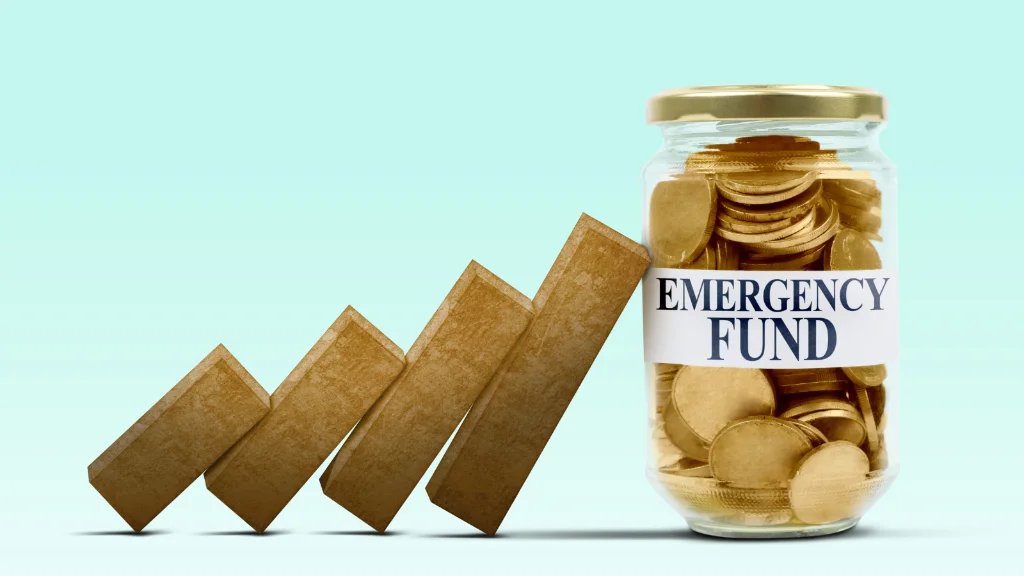
Choosing between building an emergency fund and jumping straight into the stock market is a bit like deciding whether to buy a spare tire or upgrade your car's engine. A faster engine is exciting and gets you to your destination quicker, but a flat tire without a backup can leave you stranded on the side of the road for hours.
In the world of finance, that "flat tire" often comes in the form of a sudden medical bill or an unexpected change in the job market.
For many professionals, the urge to invest is driven by the fear of missing out on compounding returns. However, true financial resilience isn't just about how much your portfolio grows; it is about how well you can protect those gains when life gets unpredictable.
When we look at the debate of emergency fund vs investing, the answer isn't always about choosing one over the other, but rather about understanding which one provides the foundation for the other to succeed.
The Financial Foundation: Why Timing Matters
If you start investing without a safety net, you are essentially gambling with your long-term goals. Imagine a scenario where the market takes a 10% dip at the exact same moment your car needs a major repair.
Without an emergency fund, you might be forced to sell your stocks at a loss just to cover the bill. This "forced selling" is the enemy of wealth creation because it interrupts the power of compounding.
Building a cash reserve is the first step in any robust strategy. It ensures that your investments remain untouched, allowing them the time they need to grow through market cycles.
By using financial planning tools, you can accurately map out your monthly "burn rate", the absolute minimum you need to survive, and set a target that keeps you from ever having to tap into your brokerage account for a non-investment reason.
The Architecture of a Solid Emergency Fund
 An emergency fund is not a static savings account; it is a dynamic tool designed for immediate liquidity. Most experts suggest a baseline of three to six months of living expenses. However, this number can fluctuate based on your personal or professional circumstances.
Fixed Costs: This includes your rent or mortgage, utilities, insurance premiums, and groceries.
Debt Obligations: Any monthly loan repayments or credit card minimums must be factored in.
Professional Stability: If you are a freelancer or a business owner, your reserve should likely lean toward 9 to 12 months to account for revenue volatility.
Factor | Recommended Buffer | Why? |
Salaried (Stable Industry) | 3-6 Months | Lower risk of sudden income loss. |
Freelancer / Business Owner | 6-12 Months | To bridge gaps in cash flow or lean seasons. |
Single Income Household | 9+ Months | High dependency on a single source of revenue. |
Dual Income (No Kids) | 3 Months | Lower risk; secondary income acts as a partial buffer. |
Moving Toward Growth: When to Start Investing
Once you have a "starter" emergency fund, even if it is just one or two months of expenses, you can begin to look at growth.
The transition from emergency fund vs investing happens when you realize that your safety net is strong enough to handle minor shocks. At this stage, you aren't stopping your savings; you are simply reallocating your surplus.
Investing is the process of putting your money to work in assets like stocks, bonds, or real estate. While the emergency fund protects you today, investing protects your future purchasing power against inflation.
In 2026, when we see healthcare inflation and shifts in global markets, staying entirely in cash is a risk in itself. The goal is to reach a point where your financial planning tools show a clear path from liquid savings to long-term wealth.
Key Investment Vehicles for Beginners
Low-Cost Index Funds: These allow you to own a piece of hundreds of companies, reducing the risk of a single stock failing.
Debt Mutual Funds: A middle ground that offers slightly better returns than a savings account with relatively low volatility.
Retirement Accounts: Tax-advantaged accounts that should be prioritized once your basic emergency needs are met.
Using Financial Planning Tools to Balance Both
 You do not have to wait until your emergency fund is "perfect" to start investing. Modern financial planning tools allow for a staggered approach.
For example, you might put 70% of your extra cash into your emergency fund and 30% into a diversified portfolio. As the fund grows, you flip those percentages.
This method keeps you motivated. Seeing your investment portfolio grow, even by small amounts, provides a psychological boost that purely saving in a low-interest account cannot match. Using an emergency fund vs investing calculator can help you visualize how long it will take to reach your targets under different scenarios.
Building a sustainable financial future requires more than just a one-time setup; it requires a systematic approach to maintaining your momentum. When balancing an emergency fund vs investing, the goal is to create a frictionless environment where your wealth grows without requiring constant manual intervention.
By treating your financial health like a well-oiled machine, you reduce the risk of emotional decision-making during market fluctuations.
1. Automate Your Monthly Contributions
Automation is the most effective way to eliminate the "choice" between spending and saving. By setting up a recurring transfer that triggers immediately after your paycheck hits your account, you ensure that your financial goals are treated as non-negotiable expenses.
This "pay yourself first" mentality is a core pillar of professional wealth management because it prevents the habit of only saving what is left over at the end of the month.
Priority Transfers: Direct a fixed percentage to your high-yield savings until your liquid target is met.
Investment Split: Once your base layer is secure, use financial planning tools to automatically route surplus cash into your diversified brokerage accounts.
Consistency over Timing: Automated contributions allow you to benefit from dollar-cost averaging, which reduces the impact of volatility on your long-term portfolio.
2. Implement the One-Month Rule for Liquidity
Liquidity is often misunderstood; having money in a high-yield account is great, but those transfers can sometimes take two to three business days to clear. The one-month rule suggests keeping exactly thirty days of essential expenses in a standard, linked savings account for instant access.
This acts as a buffer for "micro-emergencies," such as a broken appliance or a sudden veterinary bill, which don't necessarily require a full withdrawal from your deeper reserves.
Account Type | Purpose | Accessibility |
Standard Savings | Immediate micro-emergencies | Instant (ATM or Transfer) |
High-Yield Account | Core emergency fund (3-6 months) | 1-3 Business Days |
Brokerage Account | Long-term wealth and retirement | 3-5 Business Days (Settlement) |
3. Conduct Annual Rebalancing with Financial Planning Tools
The cost of living is rarely stagnant, which means your emergency fund shouldn't be either. An amount that felt like a six-month cushion three years ago might only cover four months today due to lifestyle creep or inflation.
By performing an annual audit, you can ensure that your safety net remains proportional to your current reality. This is where financial planning tools become invaluable, as they can aggregate your annual spending data to show exactly where your "survival number" stands.
Expense Audit: Check for increases in rent, insurance premiums, or subscription costs that have become permanent.
Portfolio Check: Ensure your emergency fund vs investing ratio hasn't skewed too far in one direction due to significant market gains.
Target Adjustment: If your monthly expenses have increased by 10%, your cash reserve target must also increase by 10% to maintain the same level of security.
Avoiding the Common Pitfalls of Priority Planning
 One of the biggest mistakes people make is treating their emergency fund as a "wealth" account. It isn't. Its job is to be boring, stable, and available. If you find yourself looking at your savings and thinking, "I could be making 8% on this in the market," you are missing the point. That 8% "loss" is actually an insurance premium you pay for the peace of mind that your life won't be derailed by a single bad week.
Conversely, don't let the quest for a perfect emergency fund stop you from ever investing. If you wait until you have a year of cash and zero debt, you might miss out on years of market growth. The debate of emergency fund vs investing is best solved by finding the "safety threshold" where you can sleep at night, then aggressively pursuing growth with everything else.
Signs You Are Ready to Focus on Investing
You have at least three months of essential expenses in a liquid account.
You have no high-interest debt (like credit card balances above 10%).
Your monthly cash flow is positive, meaning you spend less than you earn.
You have basic health and life insurance in place to mitigate "big" emergencies.
Conclusion: Securing Your Financial Future
In the end, the choice between an emergency fund vs investing is a matter of sequence rather than a permanent trade-off. Your emergency fund acts as the shield, while your investments act as the sword. You wouldn't go into battle with just one. By establishing a liquid reserve first, you permit yourself to be a better, more patient investor. You won't panic when the market drops because your grocery money isn't tied up in volatile stocks.
Smart financial management is about building a system that works even when you aren't watching. By using financial planning tools to automate your savings and investments, you remove the emotional burden of "choosing" every month.
Start small, stay consistent, and remember that the best time to build a safety net was yesterday; the second-best time is today.
If you’re looking for more advanced ways to optimize your financial trajectory, explore the data-driven insights at discvr.ai to refine your long-term strategy, complemented by solutions like Loan Against Mutual Funds that add flexibility without interrupting your growth journey.