
Maintaining capital security in an environment where economic signals are mixed is the hallmark of a sophisticated financial strategy. When global headlines alternate between growth optimism and inflationary caution, the instinct to "do something" can often lead to reactive errors.
In 2026, market participants are navigating a unique landscape defined by the maturation of artificial intelligence, shifting energy policies, and a "K-shaped" economic recovery where certain sectors thrive while others lag.
True wealth preservation during these cycles isn’t about avoiding the market; it is about choosing the right safe investing options that provide a buffer against volatility. By shifting focus from short-term speculation to structured resilience, you can protect your principal while ensuring you are positioned for the next leg of the growth cycle.
10 Strategies for Safe Investing in a 2026 Volatile Market
In 2026, the global financial landscape is defined by a "K-shaped" reality: while the AI-driven "Security Supercycle" and renewable energy transitions are propelling certain sectors to record highs, high global debt and sticky inflation create a constant undercurrent of fragility.
For you as an investor, "safety" no longer means hiding in cash; it means building a resilient fortress that can withstand volatility while capturing the growth of a rapidly modernizing economy. Navigating this era requires a shift from emotional reacting to a structured, mechanical approach that separates market noise from structural value.
1. Prioritize "Quality" Large-Cap Equities
In 2026, mid-cap and small-cap valuations in India are often stretched to a premium. For safety, your core equity exposure should remain in Large-Cap Blue Chips. These companies have the "moats" and cash reserves required to fund their own AI infrastructure without relying on expensive debt. They offer a "quality tilt" that provides better risk-adjusted returns when the broader market experiences a shake-out.
2. Implement a 10-15% Gold and Silver Buffer
 Gold remains the ultimate "insurance policy" against currency debasement and geopolitical conflict. With global debt surpassing $315 trillion in 2026, central banks are accumulating gold at record rates. Silver, meanwhile, offers a dual benefit: it acts as a hedge like gold but also benefits from massive industrial demand in the solar and 5G sectors, which are booming in India's energy transition.
3. Use Systematic Investment Plans (SIPs) to Neutralize Timing
Never try to "time the bottom" in an uncertain market. Systematic Investment Plans (SIPs) are your best defense against 2026's headline-driven volatility. By investing a fixed amount monthly, you utilize Rupee Cost Averaging, automatically buying more units when the market dips and fewer when it is overvalued. This mechanical discipline removes emotion from your decision-making process.
4. Build a 6-Month "Liquid" Emergency Fund
True investment safety begins with a solid foundation. Before allocating capital to the markets, ensure you have six months of living expenses parked in Liquid Funds or High-Yield Savings Accounts. In a K-shaped recovery where job market bifurcations are common, this "peace-of-mind fund" ensures you never have to sell your long-term investments at a loss just to cover a short-term emergency.
5. Rotate into Defensive Sectors: Pharma, Utilities, and FMCG
When growth signals turn mixed, shift a portion of your portfolio to sectors with inelastic demand. People will continue to buy medicine, pay electricity bills, and purchase household essentials regardless of the Nifty's daily movement. Stocks in Pharmaceuticals and Utilities often provide stable dividends, which act as a "cushion" when growth stocks face a valuation reset.
6. Adopt a Multi-Asset Allocation Strategy
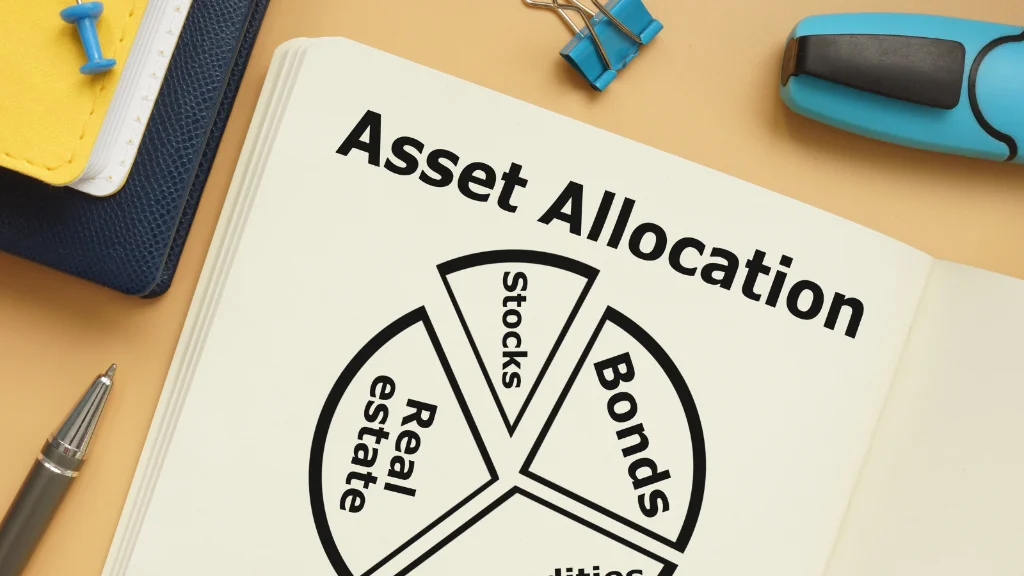 In 2026, "balanced" is the new "aggressive." Multi-Asset Allocation Funds, which spread capital across Equity, Debt, Gold, and REITs, have proven more stable during 2025's uneven returns. These funds automatically rebalance based on market conditions, selling what is expensive and buying what is cheap, saving you the trouble of manual portfolio management.
7. Utilize the "CD Ladder" for Fixed Income Stability
With interest rates remaining volatile, avoid locking all your debt capital into a single long-term bond. Instead, use a CD (Certificate of Deposit) or FD Ladder. By staggering your investments into 1-year, 2-year, and 3-year maturities, you ensure that a portion of your capital is always maturing soon, giving you the flexibility to reinvest at higher rates if they rise.
8. Diversify via International Blue Chips
While India remains one of the fastest-growing economies in 2026, global trade tensions make domestic concentration risky. Use International ETFs to gain exposure to the "Magnificent 7" or other global AI leaders. This provides a currency hedge (against USD appreciation) and ensures your wealth is not entirely dependent on the performance of a single nation’s economy.
9. Explore REITs for Real Estate Exposure
Direct real estate is often illiquid and requires massive capital. In 2026, Real Estate Investment Trusts (REITs) were granted "equity status" in India, making them a safe and liquid way to earn monthly rental income from premium commercial properties. They offer a hedge against inflation while providing a consistent yield that outperforms many traditional debt instruments.
10. Conduct Annual Portfolio Health Checks
Uncertainty requires constant vigilance. Review your portfolio every six months to ensure your "asset allocation" hasn't drifted. If your equity has grown to 80% of your portfolio due to a tech rally, it’s time to rebalance by selling some equity and buying debt or gold. This disciplined approach forces you to "buy low and sell high" systematically.
Strategic Portfolio Construction in 2026
Effective portfolio management during a "K-shaped" recovery requires a balance between traditional safety and "modern" growth. You cannot simply hide in cash, as inflation will erode your purchasing power over time. Instead, you should build a "Core and Satellite" portfolio. The "Core" consists of the safe options discussed above, while the "Satellite" allows for controlled exposure to high-growth themes like AI adoption or the green energy transition.
The following table illustrates a balanced approach to asset allocation for a moderate-risk investor during uncertain times.
Asset Category | Target Allocation | Primary Role |
Defensive Equities | 35% | Growth and Inflation Protection |
Government Bonds / FDs | 40% | Capital Preservation and Stability |
Gold / Commodities | 10% | Hedge against Currency/Geopolitical Risk |
REITs / Alternatives | 10% | Regular Income and Diversification |
Liquid Cash | 5% | Emergency Buffer and Opportunistic Buying |
Building a Robust Emergency Fund
 Before committing any capital to the market, your financial "hygiene" must be impeccable. This begins with an emergency fund that covers at least 6 to 12 months of essential living expenses.
In an era where AI-driven job shifts can cause temporary income gaps, this cash cushion is your first line of defense. It ensures that you are never forced to sell your long-term safe investing options at a loss to cover a sudden medical bill or repair.
Adopting a "Flight to Quality" Mentality
In 2026, the distinction between a "cheap" stock and a "value" stock is critical. Many companies trading at low multiples are doing so because their business models are being disrupted.
Investing during uncertainty requires a "flight to quality", prioritizing companies with high ROE (Return on Equity), low debt, and "moats" that protect them from competitors. These are the businesses that recover the fastest once the market sentiment turns positive.
Maintaining Neutral Duration in Fixed Income
Interest rate cycles in 2026 are more volatile than in the past. To protect your bond portfolio, aim for "neutral duration", investing in instruments that mature in 3 to 5 years.
This protects you from the sharp price drops that hit long-term bonds when rates rise, while still offering a better yield than a standard savings account. It provides the perfect middle ground for those prioritizing investing during uncertainty.
Psychological Resilience and Long-Term Discipline
The greatest enemy of safe investing isn't the market; it is the investor’s own psychology. During a "correction," the human brain perceives a falling portfolio as a physical threat, triggering a "fight or flight" response.
This often leads to selling at the bottom. To combat this, you must treat your investment strategy like a business process: data-driven, unemotional, and focused on the three-to-five-year horizon.
Success in investing during uncertainty is often defined by what you don't do. Avoiding "FOMO" (Fear Of Missing Out) on speculative bubbles and resisting the urge to liquidate your core holdings during a 10% market dip are the behaviors that separate high-net-worth individuals from the average participant.
By focusing on your long-term "Wealth Plan," you turn volatility from a threat into an opportunity to rebalance.
 Rather than checking your portfolio daily, set "rebalancing triggers." For example, if your equity allocation grows from 40% to 50% because the market is doing well, sell the excess 10% and move it into safe investing options like debt or gold.
This forced "sell high, buy low" mechanism ensures you are consistently taking profits and protecting your gains before the next downturn occurs.
A quarterly review is sufficient to ensure your investments are still aligned with your goals. During these reviews, don't just look at the "return" percentage. Look at the underlying health of the companies or funds you own.
If a company’s debt is rising or its earnings are consistently missing targets, it may no longer fit the criteria for a "safe" investment, regardless of what the price chart says.
The 24-hour news cycle thrives on "headline risk." In 2026, many "crises" are short-lived and have little impact on the long-term fundamentals of the global economy.
By limiting your consumption of sensationalist financial news and focusing on primary data, such as GDP growth, inflation trends, and corporate earnings, you maintain the clarity needed to stay the course.
Conclusion
Safe investing is not about the absence of risk, but the mastery of it. By combining high-quality large-cap equities with government-backed securities and tangible assets like gold, you create a portfolio that is built to endure.
The key to investing during uncertainty is preparation, having your emergency funds ready, your asset allocation set, and your discipline sharpened before the storm arrives.
As you look to navigate the complexities of the 2026 market, having the right tools is essential. Platforms like discvr.AI provide the deep insights and AI-enhanced data analysis you need to strip away the noise and find the true value in today’s economy.
Whether you’re targeting the next high-growth sector or seeking stable safe havens, our intelligence, paired with flexible solutions like Loan Against Mutual Funds, helps you act with clarity while keeping your long-term portfolio intact.