
The landscape of investing has changed dramatically in recent years, thanks in part to the rise of robo-advisors. These digital platforms have made it easier for individuals to invest in mutual funds and other asset classes with minimal effort and at a lower cost. While robo-advisors are relatively new, they have quickly gained popularity among investors seeking automated, cost-effective solutions for their portfolios.
Many beginners use robo-advisors for investments because they offer automated portfolio management based on risk profile and financial goals.
What Are Robo-Advisors?
Robo-advisors are online platforms that use algorithms and automated systems to provide financial planning and investment management services. Unlike traditional financial advisors, robo-advisors require little to no human intervention, offering investment strategies based on the user's risk tolerance, goals, and time horizon.
These platforms offer automated portfolio management, making use of algorithms to allocate and manage your investments. Robo-advisors typically invest in low-cost, diversified portfolios, often using index funds or exchange-traded funds (ETFs), which makes them an appealing choice for investors looking for simplicity, transparency, and lower fees.
How Robo-Advisors Work in Mutual Fund Investing
Robo-advisors simplify the process of mutual fund investing by offering a curated selection of funds based on your individual profile. You can now use robo-advisors for investments through most online wealth platforms with quick onboarding and low minimum amounts. Here's how they generally work:
 Onboarding Process: Most robo-advisors begin with a questionnaire to assess your risk tolerance, investment goals, time horizon, and other personal preferences. This helps the algorithm determine the most suitable mutual fund investments for you.
Portfolio Allocation: Based on your answers, the robo-advisor creates a customized portfolio, often comprising mutual funds, ETFs, and other asset classes, that aligns with your risk profile and financial objectives.
Automated Rebalancing: As market conditions change or as you make contributions to your account, robo-advisors automatically rebalance your portfolio to maintain the intended asset allocation. This helps ensure that your portfolio remains in line with your long-term goals without requiring manual adjustments.
Ongoing Monitoring: Robo-advisors continuously monitor your portfolio and make adjustments as necessary. This automation allows investors to focus on their long-term strategy without needing to constantly track individual investments.
Key Benefits of Robo-Advisors in Mutual Fund Investing
Robo-advisors are changing how investors select and manage mutual funds by using data-driven algorithms instead of manual decision-making. They offer a simple, low-cost, and automated way to build and rebalance investment portfolios with minimal effort.
1. Low Costs and Fees
One of the main reasons for the rise of robo-advisors is their cost-effectiveness. Traditional financial advisors often charge high fees, including management fees and commissions, which can eat into your investment returns. Robo-advisors, on the other hand, generally have lower fees because they use algorithms and automation instead of human managers.
Robo-advisors typically charge a flat management fee ranging from 0.2% to 0.5% of assets under management (AUM), which is much lower than the fees charged by traditional advisors, which can range from 1% to 3%. Additionally, the funds recommended by robo-advisors, such as index funds and ETFs, often have lower expense ratios compared to actively managed mutual funds.
2. Accessibility and Ease of Use
Robo-advisors have democratized investing, making it accessible to individuals with little or no investment experience. Many robo-advisors have user-friendly interfaces and provide educational resources to help investors understand how their portfolios are constructed. Investors can get started with low minimum investments, making it easier for beginners to start investing in mutual funds and build a diversified portfolio over time.
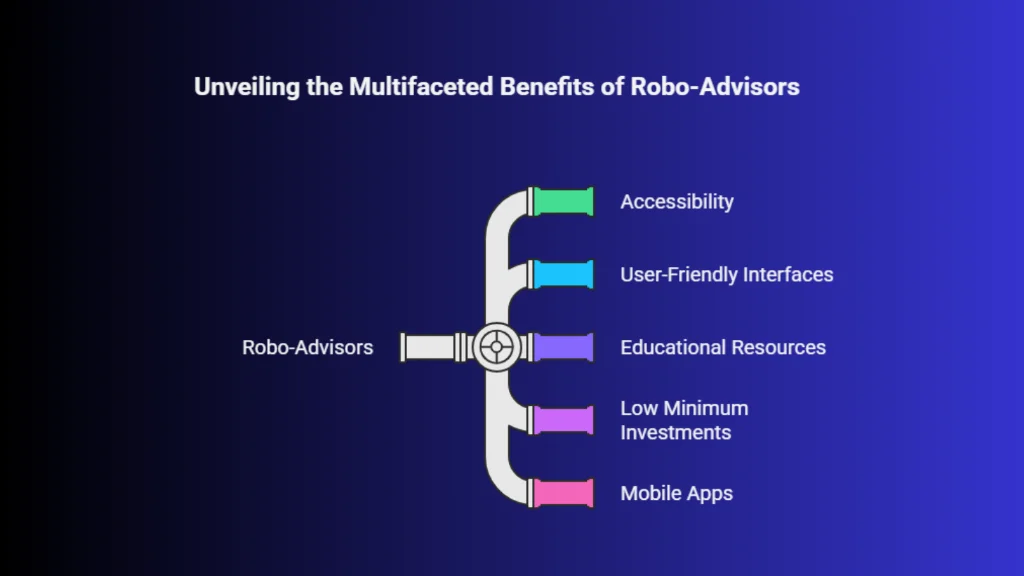 Most robo-advisors also offer mobile apps, allowing investors to track their portfolios and make changes on the go, making it even more convenient to manage their investments.
3. Personalized Investment Strategy
Despite being automated, robo-advisors provide personalized investment strategies based on individual preferences. They take into account your financial goals, risk tolerance, and time horizon to create a portfolio tailored to your needs. This is a significant advantage over traditional index funds, which follow a fixed strategy without taking your personal situation into account.
Furthermore, robo-advisors periodically review your portfolio and make necessary adjustments to ensure it remains aligned with your long-term goals, providing a hands-off investment experience that is still personalized.
4. Diversification and Risk Management
Robo-advisors typically invest in a diversified mix of asset classes, including mutual funds, ETFs, and bonds. This diversification helps spread risk, reducing the impact of any single underperforming asset on the overall portfolio. By investing in mutual funds, which already pool resources into a diversified selection of stocks or bonds, robo-advisors can create highly diversified portfolios with a wide exposure to various sectors, geographic regions, and asset types.
5. Automated Tax Optimization
Many robo-advisors offer tax-loss harvesting and tax-efficient fund selection to minimize your tax liabilities. Tax-loss harvesting involves selling investments that have experienced a loss to offset taxable gains, thereby lowering your tax bill. This feature can be especially beneficial for investors with larger portfolios, as it helps enhance after-tax returns.
The Future of Robo-Advisors in Mutual Fund Investing
Robo-advisors are becoming increasingly popular as investors recognize the advantages of automated investing. As technology continues to evolve, we can expect robo-advisors to integrate even more advanced features, such as artificial intelligence (AI) and machine learning, to improve portfolio management and provide more tailored recommendations.
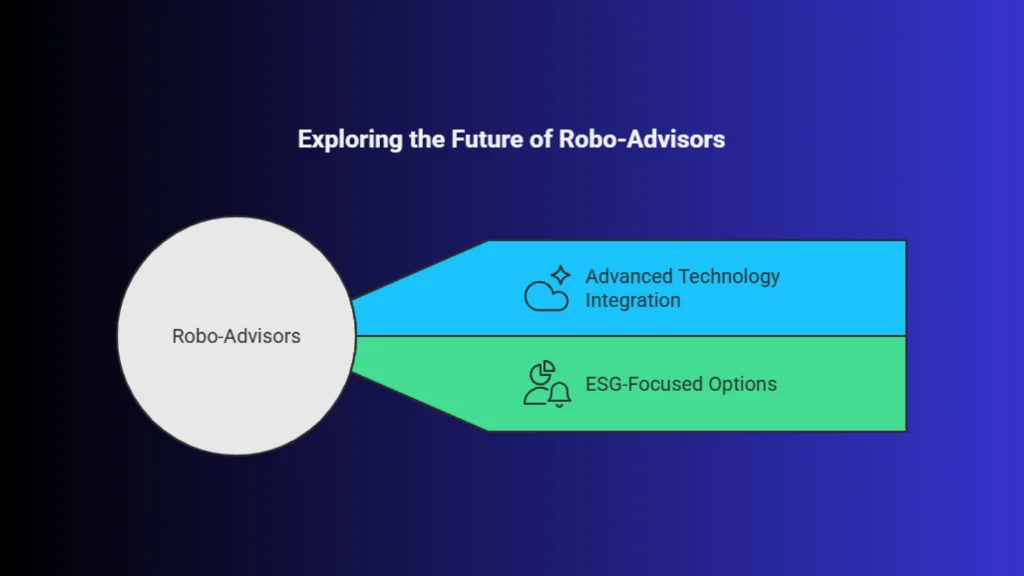 Additionally, the rise of socially responsible investing (SRI) and environmental, social, and governance (ESG) factors is influencing the mutual fund landscape. Robo-advisors are likely to offer more ESG-focused options as demand for these types of investments continues to grow.
Conclusion
Robo-advisors have revolutionized mutual fund investing by offering low-cost, automated, and personalized investment management. With their ability to provide accessible, diversified, and tax-efficient portfolios, robo-advisors are an excellent choice for investors looking to build long-term wealth with minimal effort. If you want a simple and low-risk way to start investing, it makes sense to use robo-advisors for investments for long-term planning. By using robo-advisors, you can take advantage of professional portfolio management without paying high fees or spending time making investment decisions. Log in today to explore the best robo-advisor platforms and start investing in mutual funds with ease.