
In the world of wealth management, liquidity is often the missing piece of the puzzle. You might have a robust portfolio, but when an immediate financial need arises, the instinct is usually to hit the "redeem" button.
This is where a LAMF loan enters the conversation as a strategic alternative. Instead of liquidating your assets and potentially losing out on future growth, you use your existing holdings as collateral to bridge the cash gap.
But the burning question remains: Does LAMF affect mutual fund returns? To understand this, one must look beyond the simple interest rate and evaluate the "net impact" on one's wealth. While your units continue to stay invested, the cost of borrowing and the risk of market volatility create a dynamic relationship between your debt and your equity.
How a LAMF Loan Interacts with Your Portfolio
A LAMF loan (Loan Against Mutual Funds) is essentially an overdraft facility. When you pledge your units, the bank or NBFC marks a "lien" on them. This means you cannot sell those units until the loan is repaid, but crucially, you still own them. Because you haven't sold the units, they continue to participate in the market's ups and downs.
The impact of LAMF on returns is primarily indirect. It doesn't change the performance of the fund itself, but it does change the "net return" in your pocket.
If your mutual fund grows at 12% and your loan interest is 10%, you are technically still in the green. However, if the market stagnates, the interest cost can become a drag on your overall financial health.
Feature | Impact on Your Investment |
Compounding | Stays intact as no units are sold |
Taxation | No capital gains tax (since there is no sale) |
Dividends/IDCW | Continue to be credited to your account |
Ownership | You remain the owner of the units |
Evaluating the Impact of LAMF on Returns
The primary advantage of opting for a LAMF loan over redemption is the preservation of your "time in the market." Compounding works best when left undisturbed. When you redeem, you reset the clock.
With a loan, your principal stays large, and the power of compounding continues to work on the entire amount, not just a leftover portion.
However, the impact of LAMF on returns must be measured against the cost of the capital. Most lenders charge interest rates ranging from 9% to 11% for these loans. For your net returns to remain positive, the fund’s performance plus the tax savings (from not redeeming) must outweigh this interest cost.
Deep Diving into the Key Factors Influencing Your Net Gains
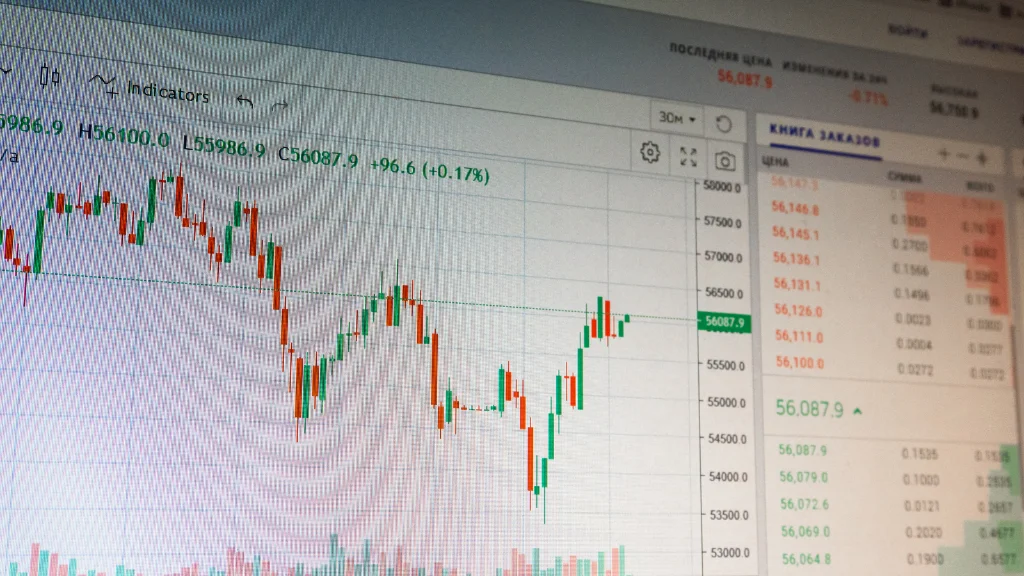 When evaluating the impact of LAMF on returns, it is easy to focus solely on the interest rate. However, the true benefit lies in the mathematical "arbitrage" you create by keeping your money at work while using the bank's capital. By leveraging a LAMF loan, you are essentially betting on the fact that the cost of debt is lower than the total cost of liquidating your wealth.
Below, we expand on the core financial drivers that determine whether this strategy adds value to your net worth.
1. Analyzing the Cost vs. Growth Ratio
The most direct way a LAMF loan interacts with your wealth is through the spread between your borrowing cost and your investment growth. In the financial world, if you borrow at 10% to keep an asset that grows at 14%, you are gaining a 4% "carry."
Because your mutual fund units are never sold, they continue to earn returns on the full principal amount.
This becomes a powerful wealth-building tool during bull markets. If you were to redeem your units to meet a cash requirement, you would lose out on the growth of those units entirely. By choosing a loan instead, you ensure that your portfolio’s compounding remains uninterrupted.
As long as the annualized return of your fund stays north of the interest rate on your loan against mutual funds, your net net worth continues to climb even while you carry debt.
Component | Impact Strategy |
Borrowing Cost | Fixed or floating interest (e.g., 9.5% - 11%) |
Asset Growth | Market-linked returns (e.g., 12% - 15% historical equity) |
Net Spread | The "Profit" made by staying invested despite the loan |
2. Leveraging Tax Arbitrage and Deferred Liability
One of the most overlooked aspects of the impact of LAMF on returns is the tax efficiency it provides. When you sell mutual fund units to raise cash, you trigger a taxable event.
If you hold equity units for less than a year, you are hit with a 20% Short-Term Capital Gains (STCG) tax. Even after a year, Long-Term Capital Gains (LTCG) tax applies at 12.5% for gains above a certain threshold.
By opting for a LAMF loan, you effectively defer this tax liability to a future date. Instead of giving 20% of your gains to the tax authorities today, you keep that money invested. That "tax portion" continues to earn market returns, which often offsets the interest you pay on the loan. This creates a scenario where the government’s share of your profit is actually working to help you pay off your loan interest.
Capital Preservation: 100% of your capital stays invested vs. ~80% after STCG tax.
Compounding on Tax: You earn returns on the money you would have otherwise paid as tax.
Liquidity without Leakage: You access cash without the "leakage" of mandatory tax outflows.
3. Total Avoidance of Exit Loads and Transaction Costs
Mutual fund houses discourage frequent churning by charging an exit load, typically 1% of the Nav, if units are redeemed within a specific period (usually 1 year for equity funds).
For a large withdrawal, a 1% hit is a significant "instant loss" that immediately lowers your realized return. When you factor in the impact of LAMF on returns, avoiding this fee is a guaranteed saving.
Beyond exit loads, the process of selling units and later buying them back involves transaction costs and potential "buy-sell spreads." A LAMF loan is a much cleaner financial move. Since the lien is simply marked on your existing units, there is no selling, no buying, and consequently, no transaction fees or exit loads.
You maintain your position in the market with zero friction, ensuring that every rupee of your investment remains dedicated to your long-term goals.
Instant 1% Saving: Bypassing exit loads is like earning an immediate 1% return on your capital.
Zero Re-entry Risk: You don't have to worry about buying back into the market at a higher price later.
Simplified Accounting: No need to track new purchase dates or cost averages for future tax filings.
The Risk of Margin Calls and NAV Fluctuations
 While your units stay invested, their value is not static. This leads to one of the most significant ways a LAMF loan can indirectly hurt your returns: the margin call. Since the loan is secured, lenders maintain a Loan-to-Value (LTV) ratio, typically 50% for equity and 80% for debt funds.
If the market crashes and your NAV (Net Asset Value) drops significantly, your collateral value falls.
In such a scenario, the lender might ask you to pledge more units or repay a portion of the loan to maintain the LTV. If you cannot do either, the lender has the right to sell your units at a market low, which permanently damages your long-term returns.
Understanding the Downside Risks
Forced Liquidation: The worst-case scenario where units are sold when the market is down to recover the loan.
Interest Accumulation: Since it is an overdraft, if you don't pay the interest monthly, it compounds, increasing your debt burden.
Market Volatility: A sharp decline in the market while holding a LAMF loan creates a double-edged sword of falling asset value and rising debt pressure.
Comparing LAMF with Direct Redemption
To truly understand the impact of LAMF on returns, we must compare it to the traditional route of selling units. When you sell, you lose the opportunity cost of future growth. In a growing market, the "cost" of redemption is much higher than the interest paid on a loan.
Let’s look at a hypothetical scenario where you need ₹5 Lakhs for 6 months.
Scenario | Action | Immediate Cost | Long-term Impact |
Redemption | Sell units worth ₹5L | Exit load + Capital Gains Tax | Loss of compounding on ₹5L |
LAMF Loan | Pledge units worth ₹10L | ~10.5% Annual Interest | Continued growth on ₹10L |
In the redemption scenario, even if the market moves up by 5% in those 6 months, you’ve missed out on ₹25,000 in gains. In the LAMF loan scenario, you paid roughly ₹26,000 in interest but kept your entire ₹10L portfolio working for you.
Strategies to Minimize the Negative Impact of LAMF
 Using a Loan Against Mutual Funds (LAMF) can be a smart financial strategy when handled with discipline and clear intent. Although it provides quick access to liquidity without selling investments, it should never be mistaken for free money. Borrowed funds come with interest obligations, and without a structured repayment plan, the cost of borrowing can gradually erode the value of your investment portfolio. Responsible usage is essential to ensure that the benefits outweigh the risks.
The most successful borrowers typically use LAMF to manage short-term liquidity gaps rather than long-term lifestyle spending. Common examples include bridge funding for a property purchase, urgent medical expenses, or temporary cash flow mismatches where a confirmed inflow of funds is expected soon. In such situations, the loan acts as a financial buffer while allowing investments to remain intact and continue compounding.
One of the most important best practices is borrowing only what is necessary. Even though lenders may allow borrowing up to 50% of the portfolio value, using the full limit increases exposure to market volatility. Lower leverage reduces the risk of margin calls if markets fall sharply, helping investors protect their pledged mutual fund units.
Regular monitoring and disciplined repayment are equally critical. Keeping an eye on Net Asset Value (NAV) movements helps borrowers anticipate market downturns and repay early if required. Additionally, treating interest payments as a fixed monthly commitment prevents debt accumulation and ensures the loan remains manageable over time.
Conclusion: Is the Impact Worth It?
Taking a LAMF loan is a sophisticated way to manage your cash flow without derailing your long-term wealth creation.
The impact of LAMF on returns is generally positive for disciplined investors because it preserves the "compounding machine."
By avoiding taxes and exit loads while keeping your units in the market, you often come out ahead compared to redeeming your investments. However, the shadow of market volatility and the cost of interest means it should never be treated as a permanent source of funds. Use it as a bridge, not a destination.
If you’re looking to leverage your portfolio more intelligently, explore the tools and insights at discvr.ai to optimize your investment journey, supported by solutions like Loan Against Mutual Funds that help you access liquidity while keeping your long-term strategy intact.