In the world of business and personal finance, we often focus on growth, expansion, and high returns. However, even the most robust financial strategy can crumble if it doesn't have a solid foundation.
In the Indian context, where economic shifts can be sudden and medical inflation often touches double digits, having a safety net isn't just a "good to have" feature; it is a critical business continuity plan for your life.
When people ask how much of an emergency fund is enough in India, they are usually looking for a magic number. The truth is that the right emergency fund amount depends entirely on your unique "burn rate", the minimum cash you need to keep your household running without a single rupee of fresh income coming in.
Why Your Current Savings Might Not Be an Emergency Fund
Most people confuse general savings with an emergency fund. You might have a few lakhs in your bank account, but if that money is earmarked for your child’s school fees next term or a planned vacation, it isn't a contingency reserve.
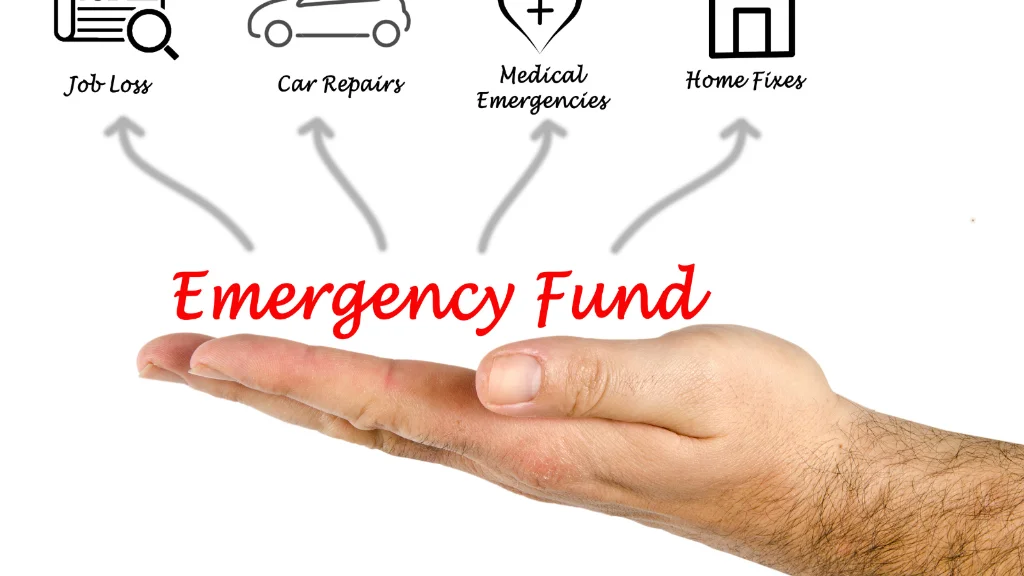
A true emergency fund is a dedicated, "no-touch" corpus designed to cover unplanned, urgent, and necessary life events like sudden job loss, medical crises not fully covered by insurance, or critical home repairs.
Without this buffer, you are forced to liquidate long-term investments like Mutual Funds or PPF at the wrong time, often at a loss. Or worse, you might fall into the debt trap of high-interest personal loans or credit cards, where interest rates can soar between 18% and 40%. Building this fund ensures you stay in control when life feels out of control.
Calculating Your Monthly Essential Outgoings
 Before you can determine the total emergency fund amount, you need to calculate your monthly "survival" budget. This is not about your current lifestyle; it is about the non-negotiables. If you were to lose your primary source of income tomorrow, what are the bills you absolutely must pay to keep your life functional?
The Essential Expense Checklist
To get an accurate number, you should add up the following monthly costs:
Housing: Rent or Home Loan EMIs.
Utilities: Electricity, water, gas, and internet bills.
Groceries: Basic food and household supplies.
Education: School or college fees for children.
Insurance: Monthly share of your life and health insurance premiums.
Debt: Car loans, personal loans, or any other fixed liabilities.
Health: Regular medicines for elderly parents or family members.
Expense Category | Estimated Monthly Amount (INR) |
Rent / Home Loan EMI | 35,000 |
Groceries & Utilities | 15,000 |
Insurance Premiums | 3,000 |
Education Fees | 7,000 |
Transport / Fuel | 5,000 |
Total Survival Budget | 65,000 |
By using an emergency fund calculator in India, you can plug in these variables to see how the total corpus grows based on the number of months you want to stay protected.
The 3-6-12 Rule: Finding Your Perfect Multiplier
The most common question remains: how many months of expenses should you save? In India, the answer varies based on your career stability and the number of people who depend on you. The "one-size-fits-all" approach of three months often falls short in a competitive job market where the hiring cycle for senior roles can last six months or more.
Under this tiered approach, you can identify which category you fall into to decide the multiplier for your survival budget:
Single Salaried Professionals: If you have a stable job in a high-demand sector and no dependents, a 3-month buffer is usually sufficient.
Double-Income Couples: If both partners earn, you have a natural hedge. A 3 to 6-month fund provides ample security.
Single-Earner Families: If you have children and aging parents depending on your salary, the risk is higher. Aim for a 6 to 9-month corpus.
Freelancers and Business Owners: Since your income is irregular and business cycles can be volatile, a 9 to 12-month fund is the gold standard for peace of mind.
To simplify this, you can use the formula:
Total Emergency Fund = (Monthly Essentials + Monthly EMIs) × Safety Multiplier.
Where to Park Your Emergency Fund in India
 An emergency fund is not an investment meant to make you rich; it is a "financial helmet" designed to protect you. Therefore, the primary goal is liquidity and safety, not high returns. You need to be able to access this money within 24 to 48 hours without any "exit load" or market risk.
In 2026, the smartest way to manage this corpus is to split it into different buckets. This ensures that a part of it is available instantly via UPI or ATM, while the rest earns a slightly higher interest rate to beat inflation.
Allocation Table for Maximum Efficiency
Instrument | Allocation | Liquidity | Why Use It? |
Savings Account | 20% | Instant | For midnight hospital emergencies or urgent cash needs. |
Sweep-in FDs | 40% | Same Day | Offers higher FD rates but stays linked to your savings account. |
Liquid Mutual Funds | 40% | 24 Hours | Better returns than savings (6-7%) with easy withdrawal. |
Using an emergency fund calculator in India helps you visualize how much to put in each bucket. By diversifying where you keep the money, you ensure that you don't lose value to the 6% annual inflation while keeping the cash "on-call" for when things go south.
Steps to Build Your Fund Without Feeling the Pinch
Looking at a large target number like 5 lakhs or 10 lakhs can be overwhelming. The trick is to treat your emergency fund like a mandatory bill that you pay to yourself every month. Consistency matters more than the initial amount.
When you use an emergency fund calculator in India, you quickly realize that your financial needs evolve as your life changes. A promotion, the birth of a child, or taking on a home loan increases your burn rate, making it important to review your emergency fund at least once a year.
Healthcare costs in India are rising by nearly 12% annually, and even with insurance, out-of-pocket expenses for diagnostics and post-care can be significant. As your salary grows, your essential expenses tend to rise as well, so your emergency corpus must scale accordingly.
In today’s environment of AI-driven job shifts and industry consolidation, maintaining a longer financial runway also gives you the flexibility to wait for the right opportunity instead of settling for the first job that comes your way.
Strategic Implementation
Start Small but Fast: Aim to save your first ₹50,000 as quickly as possible. This "Starter Fund" handles minor issues like car repairs or appliance failures.
Automate the Process: Set up a standing instruction from your salary account to a dedicated emergency account. If you don't see the money, you won't spend it.
Divert Windfalls: Use your annual bonus, tax refunds, or any unexpected cash gifts to top up the fund. This can shave months off your timeline.
The "No-Touch" Rule: Strictly define what constitutes an emergency. A "once-in-a-lifetime" sale on a luxury watch or a flash deal on a holiday is not an emergency.
Common Pitfalls to Avoid
 Even with the best intentions, many people make mistakes that undermine their financial safety net. Being aware of these traps can save you from a crisis later on.
Don't Fall Into These Traps
Keeping it all in Cash: While a small amount (₹10,000) at home is fine, keeping lakhs in cash is a security risk and loses value to inflation every single day.
Investing in Equity: Never put your emergency fund in the stock market. If an emergency strikes during a market crash, you might be forced to sell your portfolio at a 30% loss.
Ignoring the Replenishment: If you use a portion of the fund for a genuine emergency, your priority afterward should be to build it back up to the original level.
Summary of Key Recommendations
Calculate your non-negotiable monthly expenses, including EMIs.
Choose a multiplier between 3 and 12 based on your job stability.
Use an emergency fund calculator in India to get your final target.
Distribute the emergency fund amount across savings, FDs, and liquid funds.
Automate your monthly contributions to ensure the fund grows without manual effort.
Conclusion
Determining how much emergency fund is enough in India is less about following a rigid rule and more about understanding your personal risk profile. Whether it is 6 months or 12 months, the goal is to create a "sleep-at-night" factor. In a world of economic uncertainty, your emergency fund is the ultimate insurance policy for your peace of mind.
It allows you to face life's challenges with dignity, knowing that your family’s lifestyle and your long-term dreams are fully protected. Once you have this foundation in place, you are truly ready to focus on aggressive wealth creation.
Building a solid financial foundation is the first step toward true independence. If you want to go deeper into smart financial planning and uncover new ways to secure your future, explore discvr.ai for expert insights and advanced tools, alongside solutions like Loan Against Mutual Funds that add flexibility without compromising long-term growth.