
Choosing between paying off debt and putting your money into the market is one of those classic financial crossroads that feels more like a riddle than a calculation.
If you ask a mathematician, they will tell you to follow the numbers, but if you ask someone who has just cleared their mortgage, they will tell you about the incredible sleep they had that night. In the professional world, where cash flow is king, finding the right balance between these two is critical for long-term stability.
The reality is that your decision to repay a loan or invest depends heavily on the current economic climate of 2026. With interest rates stabilizing after a volatile few years, the "cost of money" has changed.
You aren't just looking at two different pots of money; you are looking at two different ways to use the same dollar. Every dollar sent to a bank is a guaranteed return on interest saved, while every dollar sent to a brokerage is a bet on future growth.
The Mathematical Framework of the 6% Rule
When you sit down to look at your balance sheet, the first thing you need is a benchmark. Historically, many experts pointed to a 6% threshold.
The logic is straightforward: if your loan’s interest rate is significantly higher than 6%, it is usually better to pay it off because finding a guaranteed 7% or 8% return in the market is difficult and risky.
However, if you have a low-interest mortgage at 3% or 4%, the math shifts. In 2026, many diversified portfolios are seeing projected returns in the 8% to 10% range. In this scenario, you are essentially "arbitraging" the difference.
You keep the "cheap" debt and let your capital grow in higher-yielding assets. This is where debt management tools become essential, as they allow you to track these moving targets in real-time.
Why High-Interest Debt is an Immediate Priority
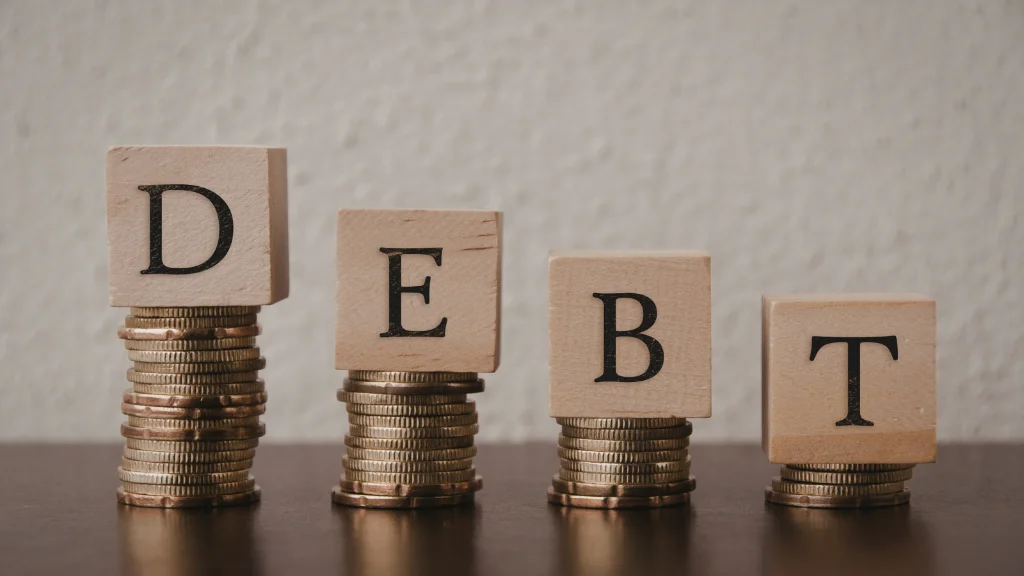 There is no debate when it comes to high-interest liabilities like credit cards or unsecured personal loans.
These are often described as "financial cancer" because they grow faster than almost any investment can keep up with. If you are carrying a balance at 18% or 24% interest, there is virtually no investment on earth, short of a lucky strike on a volatile stock, that will consistently beat that.
Choosing to repay la oan or invest becomes a simple "yes" for repayment in this category. By paying off a 20% interest credit card, you are effectively "earning" a 20% risk-free, tax-free return.
You should use all available debt management tools to consolidate these high-interest burdens into lower-rate options if possible, but the ultimate goal remains total eradication.
The Hierarchy of Debt Repayment
Toxic Debt: Credit cards and payday loans (15% to 30%+).
High-Interest Personal Loans: Unsecured debt (10% to 15%).
Mid-Tier Loans: Newer car loans or older student loans (6% to 9%).
Low-Interest Debt: Mortgages or subsidized student loans (Under 5%).
Leveraging the Power of Compounding Early
One of the biggest arguments for investing even while you have debt is the "cost of waiting." Time is the most important ingredient in the compounding formula.
If you spend ten years solely focused on being debt-free and ignore your retirement accounts, you lose a decade of growth that you can never get back. This is why many B2B professionals choose a hybrid approach.
If your company offers a 401(k) match or similar retirement benefits, that is essentially a 100% return on your money immediately.
Even if you have moderate debt, passing up a 100% return to pay off a 7% loan doesn't make sense. You should always take the "free money" first, then pivot back to your debt management tools to handle the remaining balances.
Long-Term Growth Projections
The 10-Year Delay: Starting at age 35 instead of 25 can result in 50% less wealth at retirement.
The Match Advantage: A 5% employer match effectively doubles your investment before the market even moves.
Inflation Hedge: Investing in equities historically protects your purchasing power better than holding cash or paying down low-interest fixed debt.
The Role of Modern Debt Management Tools
 Nowadays, you don't have to do the math on a napkin. Sophisticated debt management tools can sync with your bank accounts and investment portfolios to show you exactly where your next dollar does the most work. These platforms use algorithms to calculate the "Effective Interest Rate" of your debt, accounting for tax deductions.
When you use these tools to decide whether to repay a loan or invest, you can run "what-if" scenarios. For example, if you have $5,000 extra, the tool might show that paying down your car loan saves you $400 in interest over a year, while investing it in an index fund might gain $450. Having this data at your fingertips removes the emotional guesswork and replaces it with enterprise-grade logic.
Psychological vs. Mathematical Returns
We often talk about money as if we are robots, but humans are emotional creatures. For some, the weight of owing money causes a level of stress that hinders their professional performance. If having a balance on your student loans keeps you up at night, the "mathematical" 2% gain you might get from the market isn't worth the mental toll.
There is a profound sense of freedom that comes from owning your assets outright. When you repay a loan or invest, you are also choosing between "defensive" and "offensive" financial postures. Being debt-free makes you incredibly resilient to job losses or economic downturns. In 2026, as the job market remains shiftable, that resilience has a value that doesn't always show up in a spreadsheet.
Strategic Allocation: The Hybrid Model
For most high-earning professionals, the best path isn't "either/or", it is "both." You can aggressively target high-interest debt while simultaneously automating small, consistent investments. This ensures you are cleaning up your past while still building your future. By using debt management tools, you can set "trigger points" where you shift your focus based on your current net worth or interest rate environment.
If you find yourself with a windfall, such as a bonus or a tax refund, the hybrid model suggests a 50/50 split. Use half to knock down the principal on your most annoying loan and put the other half into your brokerage account. This satisfies both the need for progress on debt and the desire for market participation.
Actionable Steps for Your Surplus Cash
Step 1: Build a starter emergency fund of at least one month of expenses.
Step 2: Max out any employer-matched retirement contributions.
Step 3: Use the "Avalanche Method" to pay off any debt with an interest rate above 7%.
Step 4: Once high-interest debt is gone, split the surplus 70/30 between investing and low-interest debt.
Conclusion
The choice to repay a loan or invest is a dynamic one that requires regular check-ins. As market conditions change and your career progresses, your priorities will shift. The most important thing is to avoid "analysis paralysis." Whether you choose to clear your debt or grow your wealth, both actions put you in a better position than doing nothing at all. Use the right debt management tools to stay informed, but trust your gut when it comes to your own peace of mind.
If you’re looking to dive deeper into how AI and smart data can optimize your financial and professional decisions, explore more at discvr.ai, where intelligent insights and solutions like Loan Against Mutual Funds help you make sharper decisions while keeping your long-term growth on track.