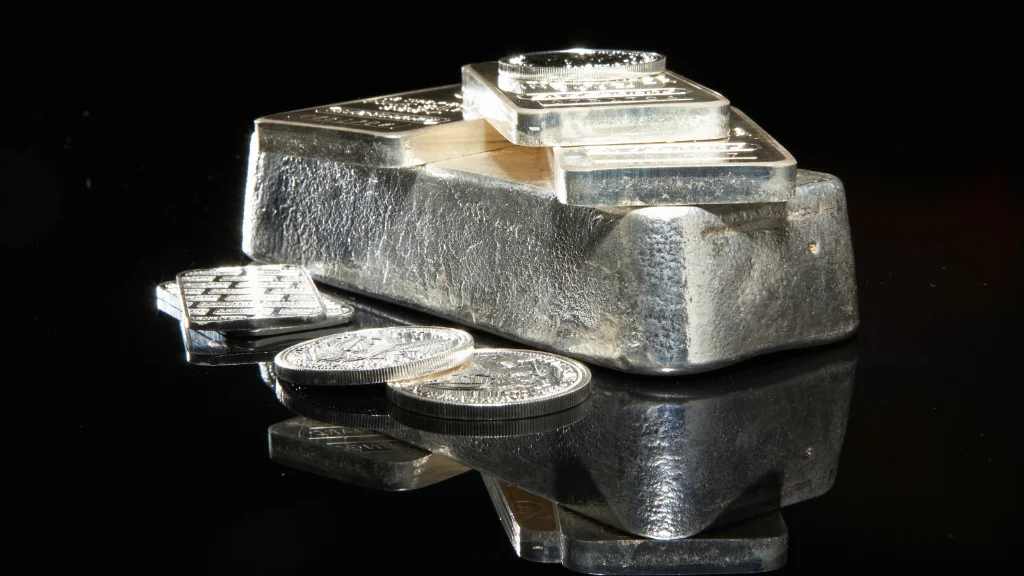
In the world of commodities, few assets carry a dual identity as strong as silver. While gold often grabs the headlines as a safe haven, silver quietly powers the technology we use every day, from the smartphone in your pocket to the solar panels on your roof.
This unique mix of "precious" and "industrial" means that silver prices don’t just move based on what is happening in the stock market; they move based on how much the world is building.
Understanding the link between industrial demand and silver prices is essential for anyone looking at the current market. We are currently seeing a significant shift where industrial needs are becoming the primary driver of value.
As global industries move toward a greener and more digital future, the "white metal" is finding itself at the very center of the global supply chain.
The Structural Link Between Industrial Demand and Silver Prices
The relationship between industrial demand and silver prices is built on a simple foundation: utility. Unlike gold, which is largely kept in vaults or worn as jewelry, over 50% of the silver produced each year is consumed by industry. When a factory uses silver to create a circuit board or a solar cell, that silver is effectively "gone" from the tradable supply, creating a constant need for fresh mining.
As we move through 2026, this industrial pull has become more aggressive. Because silver has the highest electrical and thermal conductivity of any metal, it cannot be easily replaced.
This "inelastic" demand means that even if prices rise, manufacturers often have no choice but to keep buying. This creates a price floor that protects silver during economic shifts, making it a stable component for those watching silver investment trends.
Why Industrial Consumption Dictates Market Value
Silver is often called the "indispensable metal" because its chemical properties are unique. In high-stakes manufacturing, "good enough" isn't an option, and silver provides the reliability that modern tech demands.
Physical Depletion: Unlike financial assets, silver used in industrial fabrication is often difficult or expensive to recycle in small quantities, leading to a net reduction in global stocks.
Performance Requirements: In 5G technology and AI hardware, silver’s conductivity prevents overheating and ensures data speed, making it a non-negotiable component.
Supply Lag: Most silver is a byproduct of mining other metals like copper and lead. This means supply cannot simply "turn on" just because demand spikes, leading to the structural deficits we see today.
Silver in the Modern Economy: Complete Industry-Wise Breakdown
Silver has evolved from being merely a precious metal used in coins and ornaments to becoming one of the most strategically important industrial materials in the world. Its unmatched electrical conductivity, thermal efficiency, reflectivity, and corrosion resistance make it indispensable across green energy, automotive, electronics, healthcare, and advanced technologies. Below is a structured yet easy-to-read explanation of all major industries where silver plays a crucial role, supported with tables and clear sub-points.
1. Solar Energy (Photovoltaic Industry)
 The solar industry is currently one of the largest consumers of industrial silver. Photovoltaic (PV) cells rely on silver paste printed onto silicon wafers to capture and transport electricity generated from sunlight. Without silver, panel efficiency would drop significantly, making renewable energy less viable.
Even though manufacturers are reducing the amount of silver used per panel through technological improvements, the explosive growth in global solar installations has more than offset these savings. As countries expand renewable capacity, silver demand from this sector continues to rise.
Why Silver Is Critical
Highest electrical conductivity of any metal
Minimal energy loss during transmission
Excellent resistance to oxidation
Key Applications
Component | Role of Silver | Impact |
Solar cells | Conductive paste | Maximizes electricity collection |
Busbars | Current transfer | Reduces resistance losses |
Inverters | Electrical contacts | Improves durability |
Solar energy alone accounts for a significant portion of annual industrial silver consumption.
2. Electric Vehicles & Automotive Sector
The automotive industry has transformed into a major silver consumer due to electrification. While traditional internal combustion engine vehicles use silver for basic electrical systems, electric vehicles (EVs) require substantially more due to their complex power architecture.
An EV is essentially a high-powered electronic system on wheels. Silver ensures safe energy transfer, efficient charging, and accurate battery monitoring. As EV production scales into the millions annually, this sector has become a powerful price catalyst for silver.
Silver Usage Comparison
Vehicle Type | Average Silver Used |
Gasoline car | 15–20 grams |
Hybrid vehicle | 18–35 grams |
Electric vehicle | 25–50 grams |
Major Automotive Uses
Battery Management Systems (BMS)
Charging stations and fast-charging connectors
Power steering and control modules
Safety systems (ABS, sensors)
Infotainment systems
The transition toward autonomous and connected vehicles will further increase silver intensity per vehicle.
3. Electronics & Consumer Technology
Silver is the invisible backbone of the electronics industry. Every smartphone, laptop, television, and wearable device contains small but critical amounts of silver. Because modern electronics demand speed and precision, silver’s conductivity makes it irreplaceable.
Even tiny quantities matter when billions of devices are manufactured annually. The cumulative demand from this sector is enormous.
Common Applications
Printed circuit boards (PCBs)
Switches and membrane contacts
LED chips
Semiconductor bonding wires
Keyboards and touchscreens
Device | Estimated Silver Use |
Smartphone | 0.2–0.3 grams |
Laptop | 0.5–1 gram |
Television | 0.5 grams |
Tablet | 0.3 grams |
As global device penetration rises, silver demand from electronics remains structurally strong.
4. 5G Networks & Telecommunications
 The rollout of 5G infrastructure has created a new wave of silver consumption. 5G operates at higher frequencies, generating more heat and requiring better conductivity. Silver is used in antennas, connectors, switches, and base stations.
Telecommunications equipment must operate reliably for years in extreme environments. Silver’s resistance to corrosion and superior signal conductivity make it ideal for this role.
Key Areas
Base stations
Antenna systems
Signal amplifiers
Network hardware
The rapid expansion of digital connectivity worldwide continues to support industrial silver demand.
5. Artificial Intelligence & Data Centers
The AI revolution has triggered massive investments in data centers. These facilities require advanced power distribution systems, cooling mechanisms, and high-performance processors, all of which use silver components.
Silver ensures:
Fast electron movement for high-speed processing
Efficient heat dissipation
Long-term operational stability
As AI integration expands across industries, the computing sector’s silver demand is expected to grow substantially.
6. Medical & Healthcare Industry
Silver has powerful antimicrobial properties. Long before modern antibiotics, silver was used for sterilization. Today, it plays a major role in medical applications.
Medical Uses
Wound dressings
Surgical instruments
Catheters
Medical coatings
Antibacterial textiles
Healthcare demand for silver is stable and essential rather than cyclical.
7. Jewelry & Silverware
While industrial demand dominates headlines, jewelry remains a major traditional segment. In countries like India, silver jewelry, utensils, and religious artifacts contribute significantly to retail consumption.
Silver jewelry is affordable compared to gold, making it accessible to a wider demographic. Festivals and weddings often drive seasonal spikes in demand.
Key Segments
Anklets and ornaments
Decorative items
Religious artifacts
Silverware
Although industrial usage is rising, jewelry still accounts for a meaningful share of total demand globally.
8. Investment & Financial Products
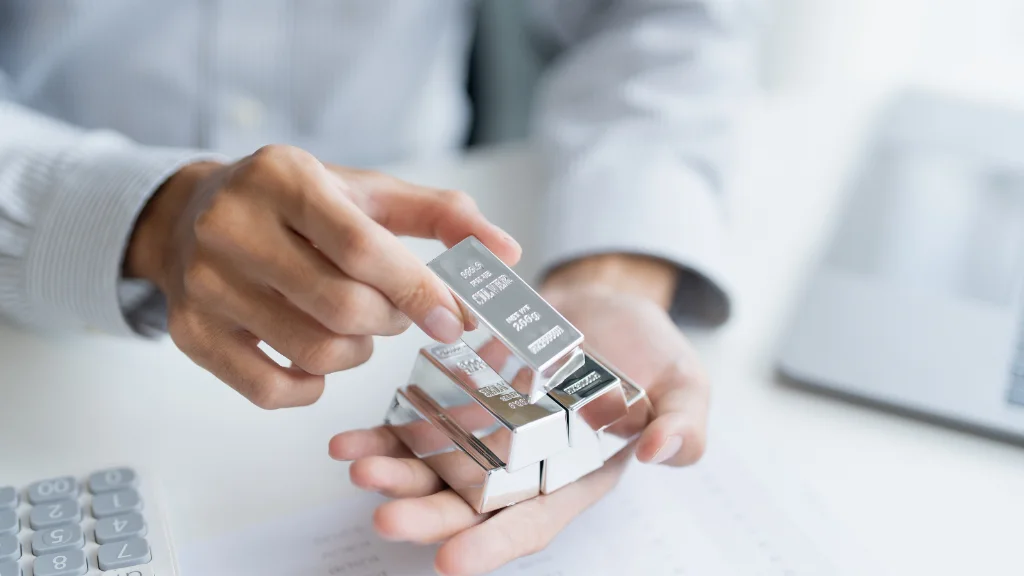 Silver functions both as an industrial metal and a store of value. Investors purchase silver in various forms to hedge against inflation and currency volatility.
Investment Channels
Physical bars and coins
Futures contracts
Digital silver platforms
Investment Type | Benefit |
Physical silver | Tangible asset |
ETFs | Liquidity and convenience |
Futures | Leverage opportunities |
Digital silver | Low entry barrier |
Because silver combines precious metal safety with industrial growth potential, it attracts both conservative and growth-oriented investors.
9. Aerospace & Defense
Silver is used extensively in defense systems and aerospace engineering due to its reliability in extreme conditions.
Applications
Missile guidance systems
Radar equipment
Satellite components
High-performance batteries
Defense equipment cannot afford failure. Silver’s conductivity and thermal stability ensure mission-critical reliability.
10. Chemical & Industrial Manufacturing
Silver also acts as a catalyst in chemical production. It plays an important role in manufacturing processes for essential industrial materials.
Key Uses
Ethylene oxide production
Formaldehyde production
Mirrors and coatings
Brazing alloys
These applications may not be visible to consumers but represent significant industrial demand.
Silver is one of the most versatile metals in the global economy. It supports:
Green energy (solar panels)
Clean transportation (EVs)
Digital infrastructure (5G, AI, electronics)
Healthcare and sanitation
Aerospace and defense
Investment and wealth preservation
Unlike gold, which is primarily a store of value, silver benefits from dual demand: industrial necessity and monetary appeal. As renewable energy expansion, digital transformation, and electrification accelerate, silver’s strategic importance is likely to increase further.
In simple terms, silver is not just a precious metal, it is a foundational material powering the modern world.
The Reality of Global Silver Production
 The supply side of the silver equation is facing unprecedented pressure that many market participants overlook. While demand is surging, the ability of the mining industry to respond is hampered by physical and logistical limits. Silver is unique because it is rarely the primary target of a mining operation; instead, it is often a secondary prize found while searching for industrial metals. This creates a disconnect where higher silver prices do not immediately result in more silver being pulled from the earth, leading to a tightening of global stocks that supports long-term pricing.
1. Declining Ore Grades and Mining Efficiency
One of the most pressing issues in the mining sector is the steady decline in ore grades across established silver deposits. This means that for every ton of rock a company mines, they are extracting significantly less silver than they did a decade ago.
To maintain the same level of output, mining companies must move more earth, consume more energy, and invest more capital, which naturally pushes the cost of production higher.
This trend acts as a natural floor for silver prices, as the "cheap silver" of the past has largely been exhausted, forcing the industry to operate with much thinner margins unless prices remain elevated.
2. Lack of New Major Discoveries and Capital Investment
The pipeline for new silver-primary mines is alarmingly thin. Discovering a significant silver deposit is an incredibly rare event, and moving a project from discovery to production can take over a decade due to environmental permitting and infrastructure needs.
Over the last several years, there have been very few world-class silver discoveries, meaning the industry is relying on aging mines that are past their peak production years.
This lack of fresh supply coming online ensures that the current silver demand will continue to outpace production, putting further strain on the global inventory and creating a sense of urgency for industrial buyers.
3. Geopolitical Risks and Regulatory Shifts in Key Regions
The geographic concentration of silver production creates a fragile supply chain. Much of the world’s silver is sourced from Mexico and Peru, countries that have recently experienced significant social and political turbulence.
Labor strikes, community protests, and changes in mining regulations have led to frequent production halts and increased operational costs for global mining firms. As these regions navigate internal transitions, the reliability of the global supply becomes a major concern.
Any significant disruption in these key areas sends immediate ripples through the market, often leading to sudden spikes in silver demand as manufacturers rush to secure their needs amidst the uncertainty.
Conclusion
The link between industrial demand and silver prices has never been stronger. We have moved past the era where silver was just a shiny metal for decorative use.
It is now a critical raw material for the most important technologies of the 21st century. From the solar panels helping us fight climate change to the 5G towers connecting our world, silver is the invisible thread running through it all.
For those considering silver investment in India, the outlook remains anchored in these solid fundamentals. While market volatility will always exist, the underlying reality of a supply deficit and growing industrial necessity provides a compelling case for the metal's value.
As we look toward the future, the "white metal" is likely to continue its path as a cornerstone of both the global economy and the modern investment portfolio.
If you are looking to stay updated on the latest shifts in commodity markets and industrial trends, platforms like these provide the deep insights and data-driven analysis you need to navigate these complex landscapes.