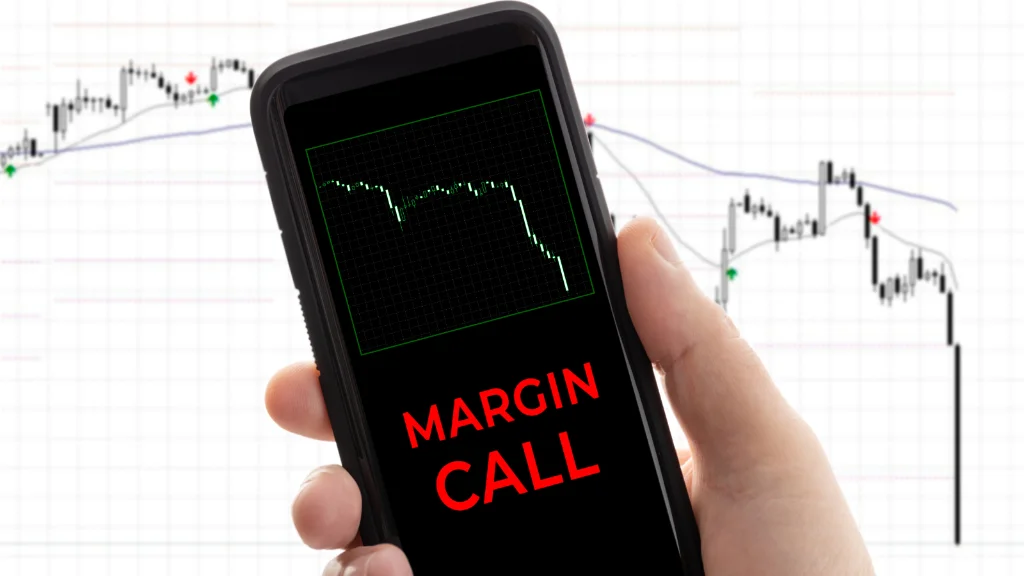
Did you know that during major market corrections, the total volume of margin calls can increase by over 400% in a single week? Statistics show that nearly 15% of retail investors using leverage face at least one margin alert during their investment journey. To manage margin call risks, one must understand that these are not just technical errors but calculated safeguards used by institutions to protect the integrity of the credit.
A Loan Against Mutual Funds (LAMF) is an excellent way to maintain a 10% to 12% portfolio growth rate while accessing immediate capital. Yet, the volatility of the market means that margin call triggers are always a possibility. Understanding the mechanics of these triggers is the first step toward building a resilient financial strategy that keeps your long-term goals intact.
Key Scenarios and Market Conditions for Margin Alerts
The interaction between your loan balance and the market value of your collateral is dynamic. When the market moves, the Loan-to-Value (LTV) ratio moves with it. To effectively manage margin call expectations, you must look at the specific scenarios where the math of your loan might suddenly shift against you.
1. Significant Market Corrections and NAV Depletion
A sharp decline in the equity markets is the most common reason for margin call triggers. When the Net Asset Value (NAV) of your pledged funds drops, the denominator in your LTV equation shrinks, causing the ratio to spike.
The 20% Threshold: Most lenders start flagging accounts when the portfolio value drops by 20% from the time of the initial pledge.
Volatility Spikes: High India VIX levels often correlate with a higher frequency of alerts.
Recovery Action: To manage margin call alerts here, you must either pay down the principal or bring in more collateral.
2. Upward Revision of Maintenance Margin Requirements
Lenders have the right to change the "Maintenance Margin" based on their internal risk assessment. If a bank decides that a certain sector is now riskier, it might raise the required buffer from 20% to 30%.
Policy Shift: A sudden change in internal risk rating for Mid-cap or Small-cap funds.
Notification Lag: Often, these changes are systemic and happen across all accounts simultaneously.
Strategic Response: Keeping a 10% cash buffer is a great way to manage margin call situations arising from policy changes.
3. Concentration Risk and Sectoral Downcycles
If your portfolio is heavily skewed toward one sector, for example, 80% in Technology funds, and that sector faces a downturn, the lender may initiate margin call triggers even if the rest of the market is performing well.
4. Rejection or Removal of Funds from the Approved List
 Financial institutions regularly update their list of "Eligible Securities." If a fund house faces a liquidity crisis or a fund's AUM (Assets Under Management) falls below a certain level, it might be removed from the list.
Collateral Devaluation: The fund is valued at zero for loan purposes.
Immediate Shortfall: This creates a sudden gap in the security cover.
Substitution: You must manage margin call alerts by substituting the delisted fund with an approved one.
5. Accumulation of Unpaid Monthly Interest
For many LAMF products, interest is billed monthly. If this interest remains unpaid, it is often added to the outstanding loan amount, which increases your LTV.
Interest Compounding: The loan grows while the asset stays the same.
Threshold Breach: Eventually, the "Interest-inclusive" loan amount crosses the LTV ceiling.
Prevention: Setting up an automated mandate is the easiest way to manage margin call risks caused by unpaid interest.
6. Regulatory Changes by Central Authorities
Regulatory bodies like the RBI or SEBI may occasionally change the maximum permissible LTV for loans against securities. If the cap is lowered from 50% to 45%, every borrower over that limit faces margin call triggers.
7. Impact of Dividend Payouts (IDCW)
 In dividend-paying schemes, the NAV falls by the exact amount of the dividend paid out. This reduction in NAV can inadvertently push a tight LTV over the limit.
NAV Drop: An artificial drop not related to market performance.
Cash Offset: While you get the dividend in your bank, your loan collateral weakens.
Proactive Switch: Switching to Growth funds helps you manage margin call issues related to dividend dates.
8. Expiry of the Annual Credit Facility
Most LAMF accounts are sanctioned for 12 months. If the renewal is delayed or your credit profile has changed, the lender may demand a partial repayment.
9. Systematic Withdrawal Plans (SWP) on Pledged Units
 If you have an active SWP on the same units you have pledged, the number of units in your account decreases every month.
Unit Depletion: Fewer units mean less total collateral value.
Automated Triggers: The system detects the unit count drop and fires a margin alert.
Coordination: It is vital to manage margin call risks by pausing SWPs on any mutual fund units that are currently pledged.
10. Fund Mergers and Scheme Consolidations
When two funds merge, there is a period where the old units are cancelled, and new ones are issued. During this transition, the valuation might appear as "zero" in the lender's system.
Scenario | Trigger Probability | Primary Solution |
Market Crash | High | Add Collateral |
Interest Accrual | Medium | Regular Payments |
Fund Delisting | Low | Fund Substitution |
Policy Change | Low | Maintain Buffer |
To manage margin call events effectively, an investor needs to be proactive rather than reactive. By keeping a close eye on these margin call triggers, you ensure that your credit facility remains a tool for growth rather than a source of financial strain.
Navigating the complexities of LAMF requires a partner that offers clarity and speed. At discvr.ai, we provide a sophisticated platform that helps you monitor your LTV in real-time, ensuring you are never caught off guard by margin call triggers. Our goal is to make your Loan Against Mutual Funds borrowing experience as disciplined and efficient as long-term investing. With an intuitive interface and enterprise-grade security, we help you proactively manage margin-call risks.