Bitcoin, the world’s first cryptocurrency, has seen its share of ups and downs since its inception. From its meteoric rise to fame to its sharp declines, Bitcoin has captivated the attention of investors, tech enthusiasts, and financial institutions alike. As we look toward 2026, the question remains: What’s next for Bitcoin? With ongoing developments in blockchain technology, regulatory challenges, and growing mainstream adoption, the future of Bitcoin holds both opportunities and uncertainties.
Many investors are researching whether it will be the right time to buy bitcoin in 2026 based on long-term price cycles and market adoption. Whether you’re an investor or simply curious about Bitcoin’s role in the digital economy, understanding these insights can help you make informed decisions about your investment strategy.
Bitcoin’s Potential for Mainstream Adoption in 2026
As Bitcoin continues to evolve, experts predict that its mainstream adoption will play a significant role in shaping its future. Over the past few years, Bitcoin has slowly transitioned from a speculative asset to a more widely accepted store of value. You can buy bitcoin in 2026 through regulated crypto exchanges using UPI, bank transfer, or global payment options. In 2026, we are likely to see even more widespread adoption, particularly in the following areas:
1. Institutional Adoption and Corporate Integration
The entry of institutional investors and large corporations into the Bitcoin space has been a key driver of its legitimacy. Companies like Tesla, MicroStrategy, and Square have already added Bitcoin to their balance sheets, signaling that institutional adoption is on the rise. By 2026, many experts believe that Bitcoin will continue to gain traction with large financial institutions, hedge funds, and multinational corporations, further integrating it into the traditional financial system.
Additionally, more companies may adopt Bitcoin as a payment method, as evidenced by its growing acceptance in retail and online markets. The trend of integrating Bitcoin into payment systems will likely accelerate as businesses recognize its value as a hedge against inflation and currency devaluation.
2. Bitcoin as a Hedge Against Inflation
In an environment where inflation rates are rising globally, Bitcoin has garnered attention as a potential hedge against the erosion of purchasing power. Unlike traditional fiat currencies, Bitcoin has a capped supply, with a total maximum supply of 21 million coins. This scarcity has positioned Bitcoin as "digital gold" in the eyes of many investors.
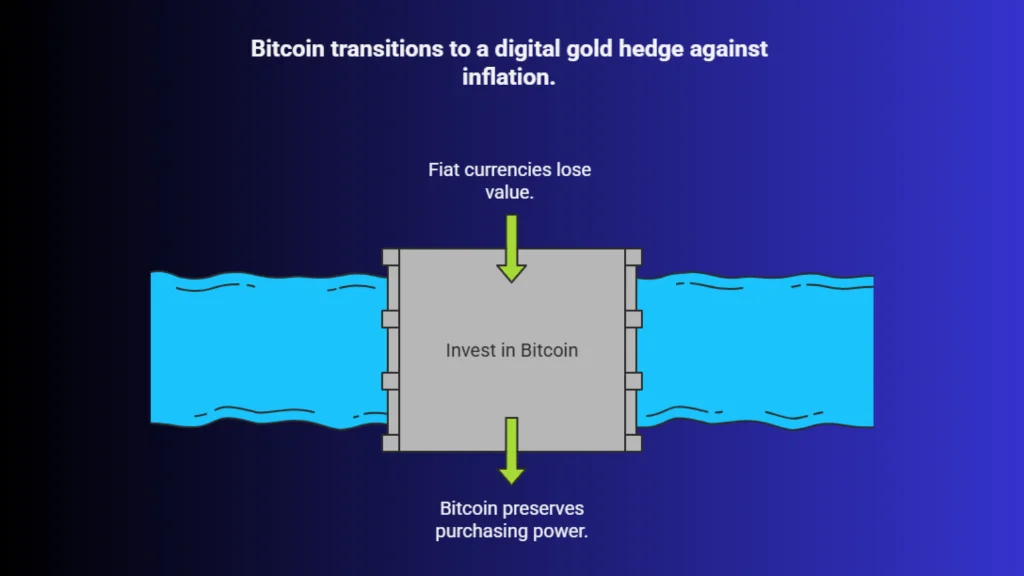 By 2026, we may see even more investors turning to Bitcoin as a store of value during inflationary periods. As governments continue to print money and global debt levels rise, Bitcoin’s fixed supply could make it an attractive alternative to traditional currencies, leading to further adoption and potentially higher demand.
Expert Predictions: Bitcoin Price in 2026
Predicting the future price of Bitcoin is notoriously difficult due to its volatile nature. However, many experts and analysts have provided forecasts for Bitcoin’s price in 2026 based on market trends, historical performance, and factors such as regulatory developments and institutional involvement.
1. Bullish Price Forecasts
Several analysts believe that Bitcoin will continue its upward trajectory, potentially reaching new all-time highs by 2026. According to some estimates, Bitcoin’s price could reach anywhere between $100,000 to $500,000 per coin, with some even predicting the possibility of $1 million per coin in the longer term. These bullish forecasts are based on the assumption of growing institutional adoption, mainstream acceptance, and a continued demand for Bitcoin as an inflation hedge.
Institutional Involvement: The increasing involvement of financial institutions and the launch of Bitcoin-related financial products (such as ETFs) could push Bitcoin’s price higher.
Limited Supply: With only 21 million Bitcoin in circulation, the demand for Bitcoin could increase as its scarcity becomes more pronounced, driving up its price.
2. Bearish Price Forecasts
While there are many optimistic predictions, some experts caution that Bitcoin's volatility and regulatory challenges could lead to price stagnation or even declines in the near future. Factors such as government crackdowns, tighter regulations, and competition from other cryptocurrencies (like Ethereum) could hinder Bitcoin's growth and lead to lower prices in 2026.
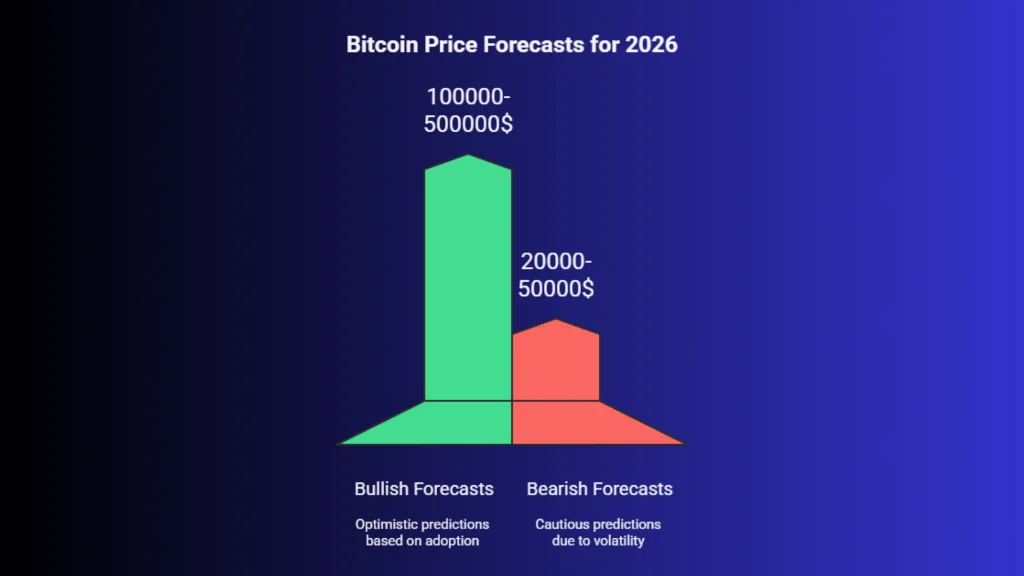 Additionally, Bitcoin's reliance on speculative investment could result in sharp price corrections if market sentiment shifts or if a major crisis occurs in the global economy. Some analysts predict that Bitcoin could see price fluctuations between $20,000 to $50,000 in 2026, especially if institutional interest wanes or if adoption is slower than expected.
Top 5 cryptocurrencies to watch in 2026
The cryptocurrency market in 2026 continues to evolve with stronger regulation, wider adoption, and deeper integration into finance and technology. These top five cryptocurrencies stand out based on market trust, utility, innovation, and long-term growth potential. Before you buy bitcoin in 2026, it is wise to compare it with other major cryptocurrencies to balance growth and risk.
Rank | Cryptocurrency | Primary use | Why it stands out in 2026 | Risk level | Best suited for |
1 | Bitcoin (BTC) | Digital store of value | Bitcoin remains the most trusted crypto asset with strong institutional adoption, ETF access, and use as a hedge against inflation | Medium | Long-term investors seeking stability in crypto |
2 | Ethereum (ETH) | Smart contracts, dApps, DeFi | Ethereum powers most decentralized applications and DeFi platforms, with strong upgrades for speed, cost, and scalability | Medium | Investors focused on Web3 and blockchain innovation |
3 | Binance Coin (BNB) | Exchange utility, blockchain gas fees | BNB supports one of the largest crypto ecosystems, including trading, payments, and decentralized apps | Medium | Active traders and blockchain users |
4 | Solana (SOL) | High-speed blockchain for dApps | Solana is known for fast transactions and low fees, making it popular for gaming, NFTs, and DeFi platforms | High | High-growth investors with higher risk tolerance |
5 | Ripple (XRP) | Cross-border payments | XRP is widely used for fast and low-cost international money transfers by financial institutions | Medium | Investors focused on banking and payment solutions |
Conclusion
As we look to 2026, Bitcoin’s future appears to be filled with both opportunities and challenges. The potential for mainstream adoption, institutional involvement, and its role as a hedge against inflation could drive Bitcoin’s price higher, while regulatory challenges and market volatility remain factors to consider. If you believe in the future of digital assets, you may want to buy bitcoin in 2026 as part of a long-term investment strategy.
For investors, staying informed about the market trends and potential risks associated with Bitcoin is crucial. Whether you believe Bitcoin will rise to new heights or face setbacks in the coming years, understanding its potential trajectory and key influencing factors will help you make informed investment decisions.
Log in today to explore Bitcoin investment options and stay ahead of the curve in the evolving cryptocurrency landscape.