
When it comes to mutual fund investments, understanding capital gains is essential for both beginner and seasoned investors. Capital gains are profits made from the sale of mutual fund units, and knowing how they work can significantly impact your investment strategy. In this blog, we’ll break down what capital gains in mutual funds are, the different types of capital gains, and the tax implications of these gains. This knowledge will help you make informed decisions and optimize your investments for better returns.
What Are Capital Gains in Mutual Funds?
Capital gains in mutual funds refer to the profits you make when you sell your mutual fund units for more than what you paid for them. When a mutual fund generates returns, whether from stocks, bonds, or other assets, these gains accumulate and are realized when you sell the fund units.
For example, if you bought mutual fund units for ₹100 each and sold them later for ₹120, the ₹20 per unit would be considered capital gains.
Capital gains can be either short-term or long-term, depending on how long you hold your mutual fund units before selling them. Understanding the difference between these two is crucial, as it affects how your gains are taxed.
Types of Capital Gains in Mutual Funds
Two primary types of capital gains can arise from mutual fund investments:
1. Short-Term Capital Gains (STCG)
Short-term capital gains arise when you sell mutual fund units within three years of purchasing them. These gains are considered "short-term" because the holding period is less than three years.
STCG Taxation: In India, short-term capital gains on equity mutual funds (funds that invest primarily in stocks) are taxed at 15%. For debt mutual funds, STCG is taxed according to the investor's income tax slab rate.
Impact on Returns: Since the tax on STCG for equity funds is relatively low, many investors prefer to hold equity funds for shorter periods to benefit from these tax advantages.
 2. Long-Term Capital Gains (LTCG)
Long-term capital gains occur when you sell mutual fund units after holding them for more than three years. These gains are typically associated with investments held for a longer period, allowing your money to grow over time.
LTCG Taxation: In India, long-term capital gains on equity mutual funds are taxed at 10% if the gains exceed ₹1 lakh in a financial year, without the benefit of indexation. For debt mutual funds, LTCG is taxed at 20% with indexation benefits (which helps reduce the tax burden by accounting for inflation).
Benefits of LTCG: The taxation rate on LTCG for equity mutual funds is relatively lower compared to STCG. The long-term growth potential, combined with favorable tax treatment, makes LTCG a powerful strategy for wealth accumulation.
If selling equity mutual funds resulted in large gains, you can legally apply for capital gains mutual funds tax exemption by reinvesting the sale proceeds into a residential house under Section 54F of the Income Tax Act.
How Are Capital Gains Taxed in Mutual Funds?
The tax treatment of capital gains depends on the type of mutual fund (equity or debt) and the holding period (short-term or long-term). You must diligently apply for capital gains mutual funds reporting in your annual tax return (ITR-2/ITR-3), calculating both Short-Term and Long-Term Capital Gains to ensure full tax compliance. Here's a detailed breakdown:
Tax on Equity Mutual Funds
Short-Term Capital Gains (STCG): If you sell equity mutual fund units within three years, the capital gains are taxed at 15%.
Long-Term Capital Gains (LTCG): If you hold the units for more than three years, LTCG exceeding ₹1 lakh per year is taxed at 10% without indexation benefits.
Tax on Debt Mutual Funds
Short-Term Capital Gains (STCG): For debt mutual funds, if the holding period is less than three years, the gains are taxed at the investor’s applicable income tax slab rate.
Long-Term Capital Gains (LTCG): If you hold the debt mutual fund units for more than three years, LTCG is taxed at 20% with indexation benefits, which can reduce your taxable gains.
Indexation Benefits
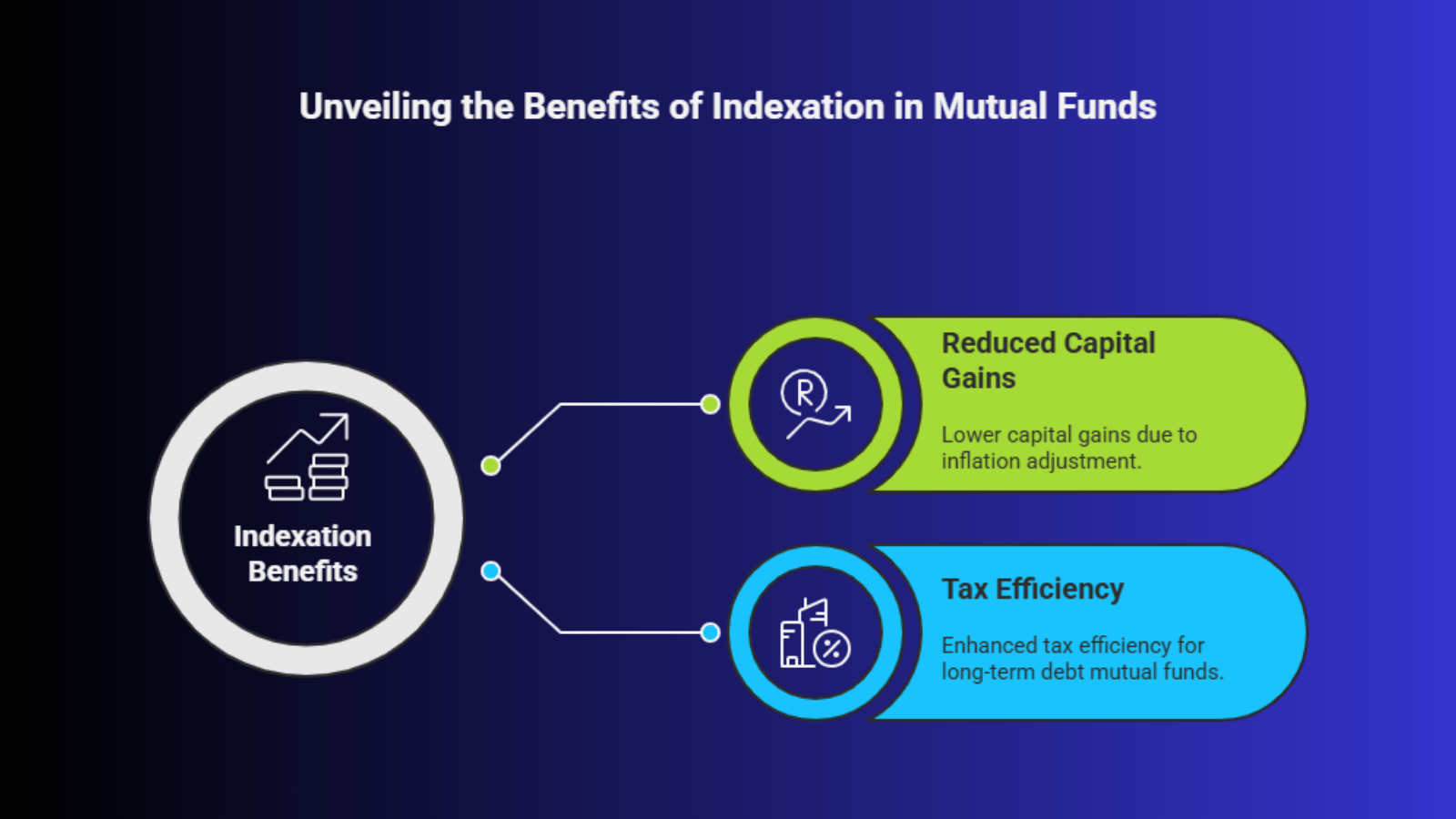 Indexation benefits apply for capital gains mutual funds from debt mutual funds. This means that you can adjust the purchase price of the mutual fund units for inflation, which reduces your capital gains and, consequently, the tax you pay. This makes debt mutual funds more tax-efficient when held for longer periods.
Why Capital Gains Matter in Mutual Fund Investments
Capital gains are a vital component of mutual fund returns. They help you build wealth over time and serve as a reflection of the fund's performance. For investors focused on capital appreciation, capital gains provide a clear indication of how well their investments are performing.
Additionally, understanding capital gains tax implications can help you plan your mutual fund investments in a way that maximizes returns and minimizes tax liabilities. By holding mutual fund units for the long term, you can benefit from favorable LTCG tax rates, which make a significant difference over time.
How to Minimize Tax on Capital Gains
 There are a few strategies you can use to minimize tax on your capital gains from mutual funds:
Hold for the Long-Term: Holding your mutual fund units for more than three years allows you to benefit from long-term capital gains tax rates, which are generally lower than short-term rates.
Use Tax-Saving Funds: Consider investing in equity-linked savings schemes (ELSS), which offer tax benefits under Section 80C of the Income Tax Act. While these are subject to a three-year lock-in period, the capital gains made are eligible for the long-term tax treatment.
Reinvest Gains: Some investors choose to reinvest their capital gains rather than withdrawing them. This allows for compounding growth and defers taxes until the units are sold.
Final Thoughts on Capital Gains in Mutual Funds
Capital gains are a key consideration when investing in mutual funds. By understanding the differences between short-term and long-term capital gains, you can make more informed decisions about when to buy, sell, and hold your mutual fund investments.
When unable to complete the purchase of a new property before the ITR deadline, you must apply for capital gains mutual fund proceeds to be deposited into the Capital Gains Account Scheme (CGAS) to preserve the tax exemption eligibility.
If you're looking to maximize returns and minimize tax, focusing on long-term investments and taking advantage of tax-efficient strategies can help you achieve your financial goals. Log in to your investment platform today to explore mutual funds and start building your portfolio with a focus on capital gains.