
Investing in mutual funds is one of the most popular and accessible ways for individuals to build wealth over time. Whether you're new to investing or looking to optimize your portfolio, understanding how to maximize your mutual fund returns in 2026 is crucial to achieving your long-term financial goals. While mutual funds offer diversification and professional management, there are several strategies you can use to increase your chances of better returns.
In this blog, we’ll explore practical tips and strategies to help you maximize your returns from mutual funds in 2026, while managing risk and aligning with your financial objectives.
Why Mutual Funds are a Good Choice in 2026
Mutual funds pool money from multiple investors to invest in a diversified portfolio of stocks, bonds, or other securities. The funds are managed by professional portfolio managers who make investment decisions on behalf of investors. One of the biggest advantages of mutual funds is the ability to access a broad range of assets with relatively low initial investment amounts.
In 2026, the economy is likely to see both challenges and growth opportunities. Mutual funds remain a strong option for long-term wealth-building because they allow you to spread risk across multiple assets while providing exposure to sectors that may outperform the broader market. However, to truly maximize returns, it’s essential to implement the right investment strategies.
Key Strategies to Maximize Your Mutual Fund Returns
Maximizing mutual fund returns requires more than simply choosing the right fund. A disciplined strategy, long-term focus, and timely adjustments can significantly improve your investment outcomes.
1. Choose the Right Fund for Your Investment Goals
One of the most important steps in maximizing your returns is selecting the right mutual fund. With various types of mutual funds available - ranging from equity funds to hybrid funds to debt funds - it's essential to choose a fund that aligns with your investment goals and risk tolerance.
Fund type | What it invests in | Risk level | Return potential | Ideal time horizon | Best suited for | Example funds (India) |
Equity funds | Primarily company shares across large-cap, mid-cap, and small-cap stocks | High | High (12–18%+ long-term, market dependent) | 5+ years | Investors seeking long-term wealth creation who can handle short-term ups and downs | SBI Bluechip Fund, Axis Large Cap Fund, Mirae Asset Emerging Bluechip Fund |
Hybrid funds | Mix of equity (stocks) and debt (bonds, treasury bills) | Medium | Moderate (8–12% over time) | 3–5 years | Investors looking for balanced growth with controlled risk | HDFC Balanced Advantage Fund, ICICI Prudential Equity & Debt Fund |
Debt funds | Bonds, government securities, corporate debt, money market instruments | Low | Low to moderate (5–8% typically) | 1–3 years | Conservative investors who want steady income and capital protection | HDFC Short Term Debt Fund, ICICI Prudential Corporate Bond Fund |
By selecting the appropriate fund based on your financial goals, time horizon, and risk profile, you’re setting yourself up for success.
2. Stay Invested for the Long Term
One of the most effective ways to maximize returns from mutual funds is by staying invested over the long term. The stock market can experience short-term volatility, but mutual funds tend to deliver more consistent returns over extended periods. By holding your investment for several years, you can benefit from compounding returns, where the returns earned on your investment generate additional returns.
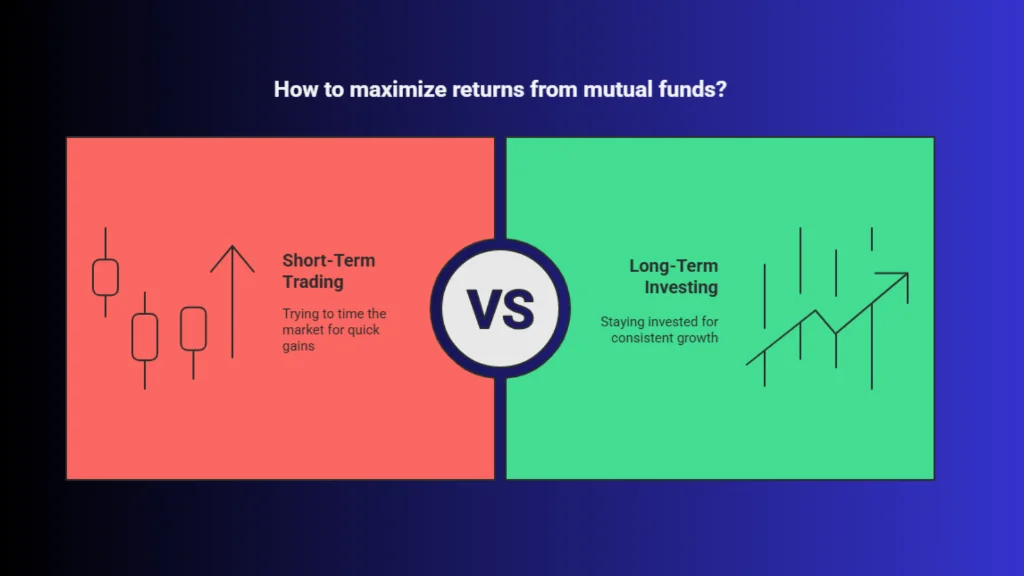 Avoid Timing the Market: Trying to time the market by buying and selling at the right moment is extremely difficult and often leads to missed opportunities. Staying invested and focusing on long-term growth is generally more successful.
Compounding: The longer you stay invested, the more you benefit from the compounding effect. Mutual fund returns build on themselves over time, creating exponential growth.
3. Regularly Review Your Portfolio and Rebalance
Market conditions change, and so do your investment needs. Regularly reviewing your mutual fund portfolio and rebalancing it according to your goals and market conditions is essential for maximizing returns.
Rebalancing: Over time, some assets in your portfolio may outperform others, causing your portfolio’s asset allocation to shift. Rebalancing involves adjusting your holdings to maintain your desired allocation, ensuring that you remain aligned with your risk tolerance and investment goals.
Monitor Performance: Keep an eye on the performance of your mutual funds and assess whether they are meeting your expectations. If a fund is consistently underperforming or no longer aligns with your goals, consider replacing it with a more suitable option.
4. Take Advantage of Dollar-Cost Averaging (DCA)
Dollar-cost averaging is an investment strategy that involves investing a fixed amount of money into a mutual fund at regular intervals, regardless of the market’s performance. This approach helps smooth out the effects of market volatility, as you buy more shares when prices are low and fewer shares when prices are high.
Consistent Investing: By investing consistently over time, you can avoid the temptation to time the market and reduce the risk of making emotional decisions based on short-term market movements.
Reduced Risk: DCA reduces the impact of short-term price fluctuations and minimizes the risk of investing a lump sum at the wrong time.
5. Keep Costs and Fees Low
While mutual funds offer professional management, they also come with management fees and expenses. These costs can eat into your returns over time, so it's important to be mindful of them.
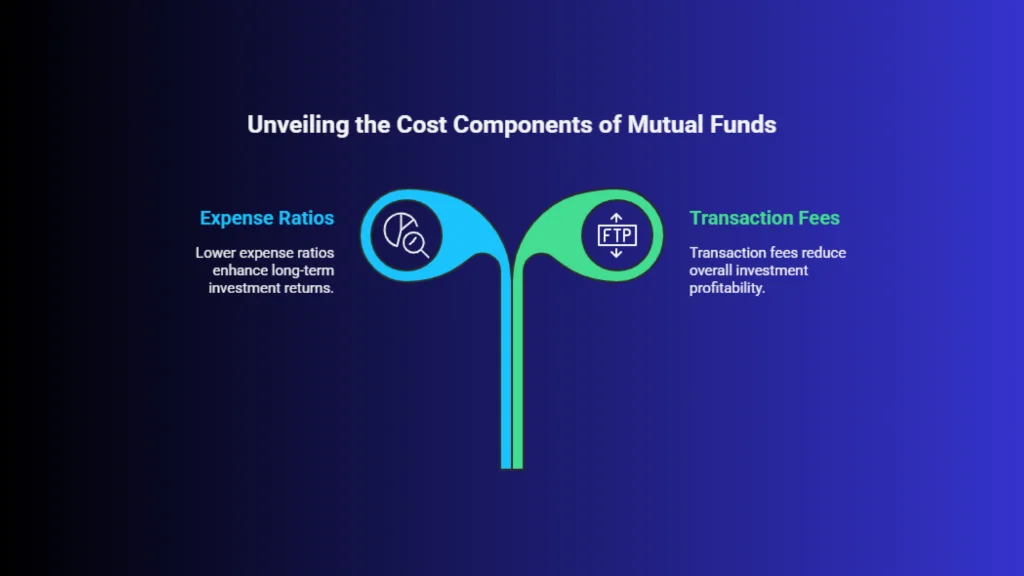 Expense Ratios: Look for funds with lower expense ratios, as high fees can significantly reduce your returns, especially over the long term. Index funds and passively managed funds generally have lower fees than actively managed funds.
Transaction Fees: Be aware of any transaction fees, sales loads, or redemption fees associated with your mutual funds. These can add up and reduce the overall returns of your investment.
By minimizing costs and fees, you can maximize your returns and improve your overall investment strategy.
6. Stay Informed About Market Trends
Being informed about market trends and economic conditions is essential for making intelligent investment decisions. While you shouldn’t react impulsively to market movements, staying up to date on financial news can help you anticipate potential changes and make better investment choices.
Diversification: Stay informed about market trends to adjust your portfolio and ensure it remains well-diversified. A well-diversified portfolio can reduce risk and increase the likelihood of consistent returns.
Conclusion
Maximizing mutual fund returns in 2026 requires a well-thought-out strategy that includes selecting the right funds, staying invested for the long term, rebalancing regularly, and minimizing costs. By applying these strategies, you can improve your chances of achieving your financial goals while managing risk.
Investing in mutual funds offers significant potential for wealth-building, but it’s important to be patient and disciplined. By following these tips, you can maximize your returns and make the most of your investment in 2026.
Log in today to explore various mutual funds and maximize your mutual fund returns for the year ahead.