
Wealth management is no longer just about accumulating assets; it is about how effectively you can leverage them. For many investors, the dilemma of needing immediate liquidity often leads to the premature sale of high-performing units. However, opting to pledge mutual funds online has emerged as a sophisticated alternative. When you choose lending against securities, you enter a structured financial arrangement that bridges the gap between long-term compounding and short-term cash requirements.
Understanding what happens after pledging is vital for any investor looking to maintain a healthy balance sheet. The transition from a simple investment to a leveraged asset involves several backend movements involving the lender, the Registrar and Transfer Agents (RTA), and the clearing corporations. This detailed guide explores the lifecycle of your investment once you initiate a loan against mutual funds, ensuring you have full visibility into the process.
1. Digital Lien Marking and RTA Integration
The moment you decide to pledge mutual funds online, a request is triggered to the RTAs like CAMS or KFintech. A lien is a legal claim over the assets used as collateral. In the digital age, this is an instantaneous process where the units are "marked" in the system.
A lien ensures that the investor cannot redeem or switch these units while the loan is active. However, it is important to note that the units remain in your folio. The ownership does not transfer to the bank or the NBFC; they merely hold a "right to sell" in the event of a total default. This transparency is why lending against securities is considered a secure and investor-friendly way to manage capital.
2. Instant Activation of the Overdraft Limit
Unlike traditional loans that result in a lump sum credit to your bank account, a loan against mutual funds typically functions as an Overdraft (OD) facility. Once the lien is successfully marked, the lender calculates your drawing power based on the current Net Asset Value (NAV) of your holdings.
Asset Category | Typical LTV (Loan to Value) | Purpose of Buffer |
Equity Mutual Funds | 45% - 50% | Protection against market volatility |
Debt Mutual Funds | 70% - 80% | Stability of underlying bonds |
Liquid Funds | 85% - 90% | High liquidity and low price risk |
This limit becomes available in a dedicated account. The primary benefit of having this limit after you pledge mutual funds online is that it provides a safety net. You don't have to use the money immediately, but it is there for whenever a requirement arises.
3. Maintenance of Ownership Rights and Corporate Actions
 A significant concern for investors is whether they lose out on the "perks" of their investment. When you opt for lending against securities, you continue to be the beneficiary of all corporate actions. This is a fundamental aspect of what happens after pledging.
Because the units are still in your name, any Income Distribution cum Capital Withdrawal (IDCW) is credited directly to your linked bank account. You do not need the lender's permission to receive these payouts. If the fund house issues bonus units, these are also credited to your folio, though the lender may automatically extend the lien to these new units to maintain the collateral value.
4. Continuous Participation in Market Upside
The most powerful thing that happens after you pledge mutual funds online is that your "time in the market" remains uninterrupted. If you had sold your units to get cash, you would miss out on any subsequent market rallies. With a loan against mutual funds, your entire 100% corpus stays invested.
If the market grows by 15% over the next year, your pledged units also grow by 15%. This growth is yours to keep. In many cases, the capital appreciation of the mutual fund exceeds the interest cost of the loan, effectively making the "cost of capital" very low or even positive. This is the strategic core of lending against securities.
5. Daily Valuation and Margin Management
Once the facility is live, the lender’s system performs a daily "mark-to-market" (MTM) valuation. Since mutual fund NAVs change every business day, the value of your collateral fluctuates. The lender monitors this to ensure the security cover remains adequate.
If you have a loan against mutual funds and the market experiences a temporary dip, you don't need to panic. The "haircut" (the 50% gap in equity funds) acts as a cushion. Only when the value drops significantly, usually below a predefined threshold, does the lender step in. Understanding this daily valuation is a key part of knowing what happens after pledging.
6. The Dynamics of a Margin Call
In the rare event of a sharp market crash (e.g., 20% or more), the value of your pledged assets might fall below the required limit to cover your borrowed amount. At this point, the lender will issue a "Margin Call". This is a formal notification asking you to restore the required LTV ratio.
Option A: You can pay back a portion of the utilized loan amount to reduce the debt.
Option B: You can pledge mutual funds online (additional units) to increase the collateral value.
Option C: If no action is taken, the lender has the right to sell a portion of your units to recover the deficit.
7. Interest Calculation on Daily Diminishing Balance
 One of the most cost-effective features of lending against securities is the interest application. After you pledge mutual funds online, interest is not charged on the total limit approved, but only on the amount you actually transfer to your bank account.
If your approved limit is ₹10 Lakhs but you only use ₹2 Lakhs for 10 days, you only pay interest on ₹2 Lakhs for those 10 days. The interest is typically calculated daily and debited at the end of the month. This makes a loan against mutual funds significantly cheaper than a credit card loan or a personal loan, where interest is often front-loaded.
8. Flexibility in Principal Repayment
Standard loans involve Equated Monthly Installments (EMIs), which consist of both principal and interest. However, in the world of lending against securities, the repayment structure is far more flexible. Most lenders allow an "interest-only" repayment model.
As long as you keep servicing the monthly interest, you can choose to repay the principal at your convenience. There is no fixed tenure in the traditional sense; you can keep the facility active for years as long as the collateral value is maintained. This lack of EMI pressure is a major reason why sophisticated investors pledge mutual funds online.
9. Impact on Credit Score and Borrowing History
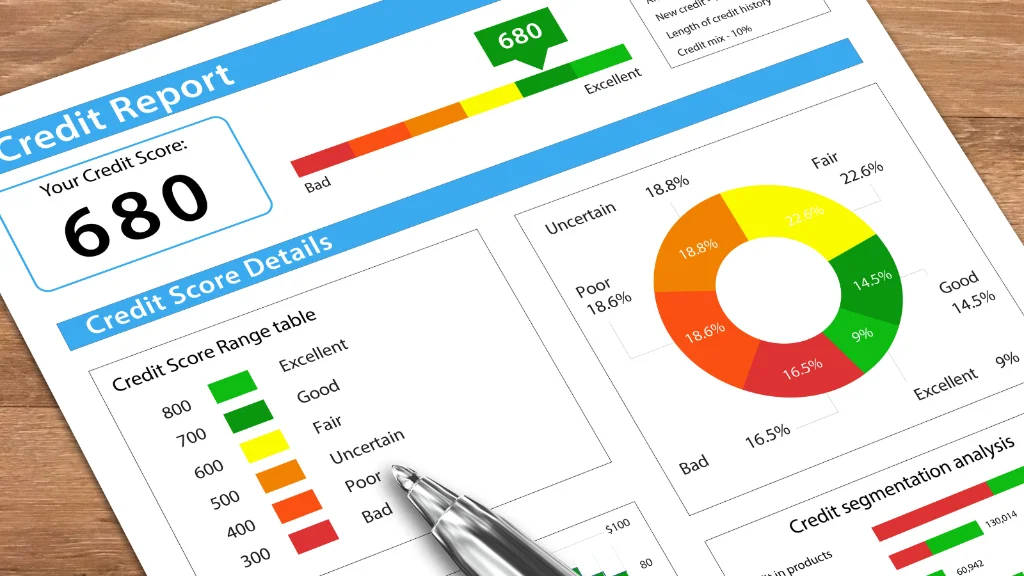 Taking a loan against mutual funds is a disciplined way to borrow. Since it is a secured loan, it carries a lower risk weight for banks. When this is reported to credit bureaus, it reflects as a secured credit line.
Timely payment of the interest on your lending against securities accounts helps in building a robust credit score. It shows that you are leveraging your assets responsibly. Furthermore, because it is secured by your own investments, the approval process doesn't usually involve the same level of scrutiny or "hard inquiries" as an unsecured personal loan, which protects your credit score from dipping during the application phase.
10. The Unpledging and Partial Release Process
The final stage of what happens after pledging is the eventual release of the assets. Once you have repaid your dues, the "unpledging" process is just as digital as the initial pledge. You can request a release of all units or a partial release.
For instance, if you have repaid 50% of your loan, you can ask the lender to release 50% of your pledged units. This gives you the freedom to sell those released units if you wish. The digital instruction is sent to the RTA, the lien is removed, and the units become "free" in your folio within a few business days.
Comparison: Selling vs. Lending Against Securities
Feature | Selling Mutual Funds | Loan Against Mutual Funds |
Tax Impact | Capital Gains Tax is applicable | No tax liability |
Compounding | Stops immediately | Continues uninterrupted |
Future Returns | Lost | Retained by the investor |
Exit Load | May apply if sold early | No exit load applicable |
Liquidity Speed | 2-3 working days | Instant (once set up) |
Conclusion
Navigating your financial needs doesn't have to mean sacrificing your investment goals. By understanding what happens after pledging, you can see that the process is designed to protect your interests while providing the liquidity you require. From maintaining your ownership rights to benefiting from market growth, lending against securities is the ultimate tool for modern financial management.
The journey of a loan against mutual funds is transparent, digital, and highly flexible. It empowers you to handle emergencies, business expansions, or opportunistic investments without disrupting your wealth-creation journey. By choosing to pledge mutual funds online, you turn your stagnant portfolio into a dynamic source of credit.
Stop liquidating your future for today's needs. Experience a smarter way to manage your money with discvr.ai. Our platform offers a seamless, 100% digital experience for lending against securities, allowing you to unlock cash in minutes. Visit discvr.ai today to see how your mutual fund portfolio can work harder for you.