
Investing in assets that retain value and offer long-term growth potential is essential to building wealth. While traditional assets like stocks, bonds, and real estate have long been popular choices, newer investment opportunities like digital gold are rapidly gaining traction. With the increasing interest in alternative assets, particularly in a digital-first world, understanding the differences between digital gold and traditional investment assets can help investors make informed decisions about where to allocate their money.
In this blog, we’ll compare digital gold to traditional investment assets, discussing the benefits, risks, and the factors you should consider when deciding which investment is best suited for your financial goals.
What is Digital Gold?
Digital gold is a relatively new form of investment that allows individuals to purchase, store, and trade gold digitally, often through online platforms or apps. It operates on a similar principle to physical gold, but with a modern twist. Instead of buying physical gold bars or coins, investors buy units of gold that are backed by real gold stored in vaults. These digital gold units can be bought, sold, or transferred easily through digital platforms.
One of the primary benefits of digital gold is the ability to invest in gold without the need for physical storage or security concerns. The value of digital gold is tied to the current market price of gold, meaning it provides the same wealth-preserving benefits as physical gold.
What Are Traditional Investment Assets?
Traditional investment assets are the well-established categories of investments that have long been used to build wealth, such as stocks, bonds, real estate, and mutual funds. These assets are often seen as the pillars of modern investing, each offering its own set of advantages and risks.
Stocks: Investing in stocks means owning a share of a company, and their value is determined by the company’s performance and broader market conditions. Stocks can offer high returns but also come with higher risk.
Bonds: Bonds are debt instruments issued by governments or corporations, offering fixed interest payments. They are generally considered less risky than stocks but provide lower returns.
Real Estate: Real estate investments involve buying properties to generate income through rentals or capital appreciation. Real estate can offer long-term returns and act as a hedge against inflation.
These traditional assets have been the cornerstone of wealth creation for centuries, but they also come with their own set of risks and complexities. Investors who want portfolio stability frequently invest in digital gold alongside equities and mutual funds to balance overall risk.
Key Differences Between Digital Gold and Traditional Investment Assets
As investors look for safer, more flexible ways to grow and protect wealth, the comparison between digital gold and traditional assets has become increasingly important. Many first-time investors choose to invest in digital gold because it allows them to start with very small amounts while gaining exposure to gold prices.
1. Liquidity and Accessibility
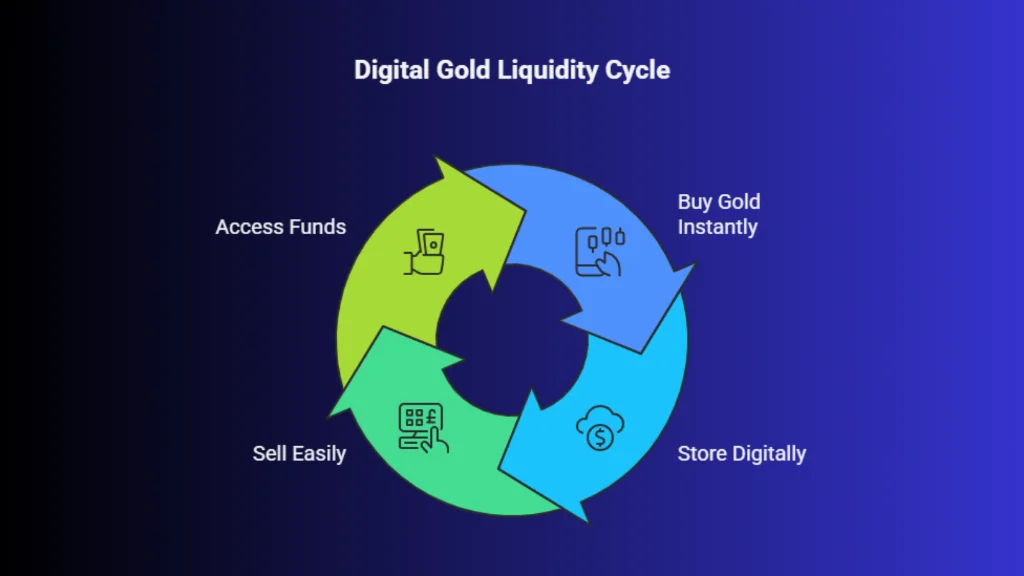
Digital gold is highly liquid, meaning you can buy and sell gold instantly through an app or online platform, often at the click of a button. This makes it incredibly accessible, particularly for investors who do not want to deal with the hassles of physically buying, storing, or securing gold. Investors can start with small amounts, making it ideal for those new to investing or those who prefer low-cost, accessible investments.
 On the other hand, traditional investment assets like real estate or stocks also offer liquidity, but there are key differences. Stocks can be sold quickly on the open market, but real estate, while potentially lucrative, requires more time and effort to buy, sell, or manage. The liquidity of stocks and bonds is generally much higher compared to real estate, but in cases where markets are volatile or illiquid, even stocks can take time to sell at a fair price.
2. Risk and Volatility
When comparing digital gold to traditional investments like stocks or real estate, it’s important to understand the risk factors involved. Digital gold offers a level of safety and stability because it is based on the value of physical gold, which has a long history of being a reliable store of value. While gold does experience fluctuations in price, it is often seen as a hedge against inflation and economic instability. In times of market uncertainty, gold tends to hold its value better than other assets.
Traditional investments, especially stocks, can be highly volatile. The stock market is prone to short-term price swings based on economic reports, geopolitical events, and market sentiment. Real estate, while generally more stable than stocks, is not immune to market downturns and can experience slow periods of low appreciation, particularly in markets that are subject to regional economic conditions.
While digital gold may offer stability compared to stocks, it does not provide the same level of growth potential that equities do. For investors seeking higher returns, traditional assets like stocks may be more attractive, though they come with higher risks.
3. Returns and Growth Potential
In terms of long-term returns, traditional investments such as stocks and real estate have historically outperformed gold. The stock market, in particular, offers the potential for significant capital appreciation over time, especially if you invest in high-growth companies or sectors. Real estate can also offer long-term value appreciation, particularly in desirable locations, along with rental income.
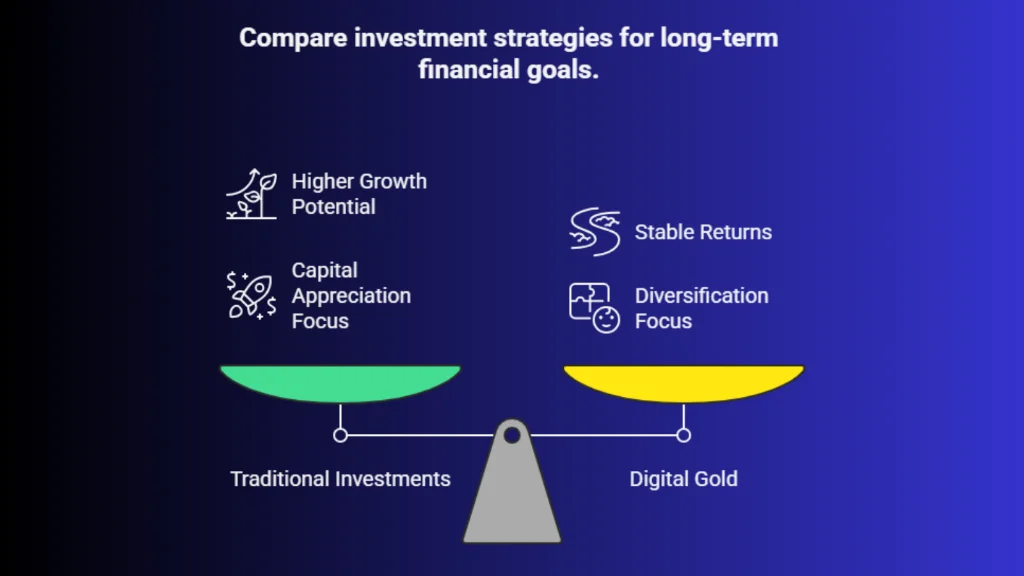 Digital gold, while a relatively stable asset, does not offer the same growth potential. Gold has historically provided steady returns over time, but has not outpaced other assets like stocks in terms of long-term growth. As a result, digital gold is typically viewed as a conservative investment, suitable for diversifying your portfolio or hedging against inflation rather than driving substantial growth.
4. Storage and Security
One of the most significant advantages of digital gold over physical gold is that there is no need to worry about storage or security. Physical gold requires safe storage in vaults or other secure locations, and maintaining its physical integrity can become costly and inconvenient. Digital gold, however, is stored in secure vaults by the service provider, and the investor simply holds a digital certificate of ownership.
Traditional investments such as real estate or stocks also come with their own set of storage and security concerns. Real estate requires property management, insurance, and maintenance, while stocks, while easier to manage, still require attention to brokerage fees, tax considerations, and market risks.
Long-term savers who invest in digital gold benefit from price appreciation over time while enjoying high liquidity and zero storage hassle.
Conclusion
Both digital gold and traditional investment assets have their place in a well-rounded investment strategy. Digital gold provides a convenient, low-maintenance, and relatively stable investment option, especially for those looking to hedge against inflation or diversify their portfolio. However, for long-term growth potential and higher returns, traditional assets like stocks, real estate, and bonds may be better suited to your financial goals.
Ultimately, the right choice between digital gold and traditional investments depends on your risk tolerance, financial objectives, and investment horizon. For those looking for a balanced portfolio, incorporating both types of assets may offer the best of both worlds.
Log in today to explore your investment options in digital gold or traditional assets and begin building a diversified portfolio that aligns with your financial goals.