
Blockchain technology has revolutionized the way we think about data management, security, and transparency. While initially associated with cryptocurrencies like Bitcoin, blockchain’s potential goes far beyond digital currencies. Today, blockchain technology is being used in various industries to improve efficiency, reduce fraud, and streamline operations. Many enterprises now use blockchain in business to improve transparency, data security, and auditability across operations. Let’s explore how blockchain technology is being applied in real-world scenarios and how businesses can leverage it to enhance their operations.
What is Blockchain Technology?
At its core, blockchain is a decentralized, distributed ledger technology that allows data to be securely stored and shared across multiple computers in a way that ensures transparency, immutability, and trust. Each piece of data, or "block," is linked to the previous one, creating a chain of blocks, hence the name “blockchain.” The key advantages of blockchain include:
Transparency: All transactions are visible to authorized users and cannot be altered once recorded.
Security: Blockchain uses cryptographic methods to secure data, making it difficult to hack or tamper with.
Decentralization: There is no single point of failure, which makes blockchain resistant to manipulation and fraud.
Companies can use blockchain in business today through supply chain platforms, smart contracts, and digital payment systems. Given these features, blockchain is being increasingly adopted across various sectors for applications ranging from financial services to supply chain management.
Key Real-World Applications of Blockchain Technology
Blockchain technology is no longer limited to cryptocurrencies and trading. Before you use blockchain in business, it helps to compare it with traditional databases to understand cost, speed, and scalability trade-offs. It is now solving real business problems across finance, supply chains, healthcare, government, and digital security.
1. Supply Chain Management
One of the most promising use cases for blockchain is in supply chain management. Blockchain can provide greater transparency and traceability in the movement of goods and materials from production to delivery. Every transaction, from the sourcing of raw materials to final delivery, can be recorded on a blockchain, ensuring that all parties have access to the same data.
Improved Traceability: Blockchain allows businesses to track products in real-time, ensuring that they meet quality standards and are ethically sourced.
Reduced Fraud: By providing an immutable record of each step in the supply chain, blockchain reduces the potential for fraud and counterfeit goods.
Efficiency: Blockchain can streamline the supply chain by automating processes such as payments and inventory management, reducing paperwork and human errors.
For example, companies like IBM and Walmart have already begun using blockchain technology to improve supply chain visibility and reduce inefficiencies in the food industry.
2. Financial Services and Payments
Blockchain’s application in the financial sector is one of its most well-known use cases. It is used for peer-to-peer payments, remittances, and cross-border transactions. Blockchain can simplify and secure the transfer of funds between individuals or institutions, eliminating the need for intermediaries such as banks.
Faster Transactions: Blockchain can enable near-instantaneous transactions, reducing the time and cost associated with traditional banking systems.
Reduced Fees: With no need for intermediaries, blockchain transactions typically have lower fees compared to traditional financial systems.
Smart Contracts: These self-executing contracts, which automatically enforce the terms of an agreement, are powered by blockchain. They have the potential to automate a wide range of financial transactions, from insurance claims to loan agreements.
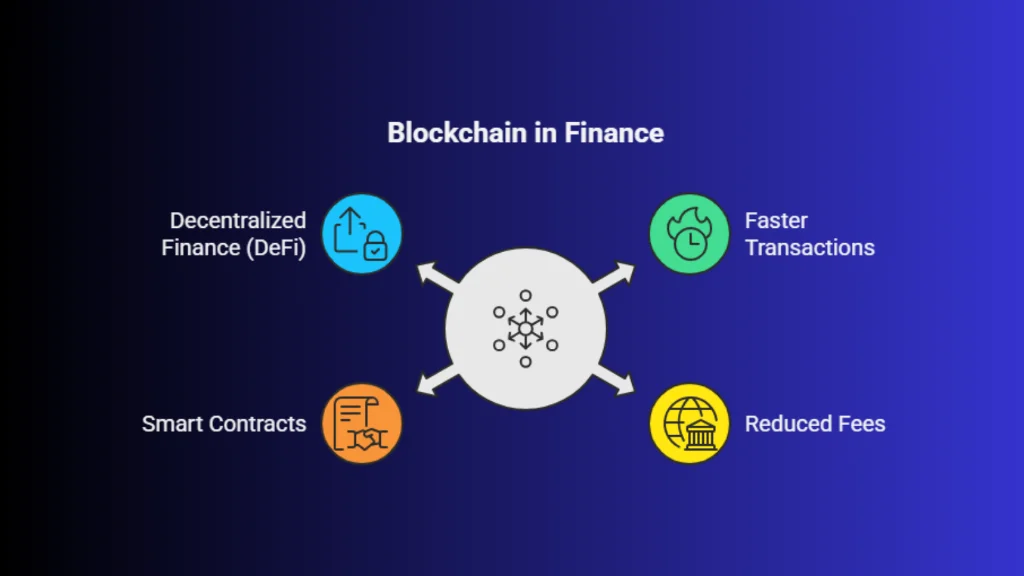 Ethereum, for example, is widely used for decentralized finance (DeFi) applications, allowing users to borrow, lend, and trade digital assets securely without relying on traditional financial institutions.
3. Healthcare and Medical Records
Blockchain has the potential to revolutionize the healthcare industry by providing a secure and immutable record of patient data. Blockchain can enable healthcare providers to securely store patient records, share them across different institutions, and ensure data integrity.
Data Security: Blockchain ensures that patient records are stored securely and are not tampered with, giving patients control over their data.
Interoperability: Blockchain allows healthcare providers to share patient data across different systems without the need for complex, proprietary solutions.
Efficiency: Blockchain can streamline administrative processes, such as billing and insurance claims, by automating tasks and reducing paperwork.
A good example of blockchain use in healthcare is Medicalchain, which uses blockchain to store electronic health records securely and allows patients to grant access to their data.
4. Voting Systems
Another significant application of blockchain is in voting systems. Blockchain can provide a secure and transparent way to conduct elections, ensuring that votes are accurately recorded and cannot be tampered with.
Security: Blockchain can prevent voter fraud by ensuring that votes cannot be altered after submission.
Transparency: With blockchain, the voting process can be fully transparent, allowing for independent verification of the results.
Accessibility: Blockchain-based voting systems could be accessible online, allowing for easier participation in elections, especially in remote areas.
Several countries, including Estonia, are experimenting with blockchain-based voting systems to improve the security and efficiency of their elections.
5. Intellectual Property and Copyright Protection
Blockchain can also be used to protect intellectual property (IP) rights and ensure the authenticity of digital content. By recording every transaction related to an IP asset, such as a piece of art or music, on a blockchain, creators can prove ownership and track the use of their work.
Proof of Ownership: Blockchain can serve as a digital certificate of ownership, helping artists and creators protect their rights.
Royalty Payments: Blockchain can automate royalty payments, ensuring that creators are paid fairly for the use of their work.
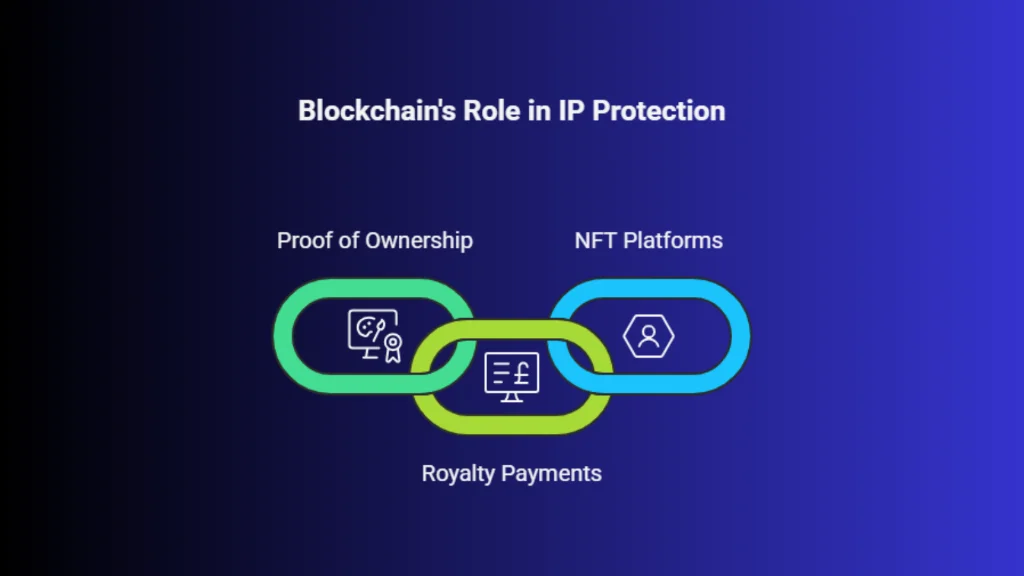 Platforms like OpenSea are already using blockchain to help artists mint, register, and track their digital artwork as NFTs, ensuring transparent ownership records and fair creator royalty payouts on every resale.
Final Thoughts
Blockchain technology is more than just a buzzword; it is transforming industries by providing secure, transparent, and efficient solutions for various business applications. From supply chain management to financial services, healthcare, and voting systems, blockchain’s potential to streamline processes, reduce fraud, and improve security is immense.
For businesses looking to integrate blockchain into their operations, the possibilities are vast. Whether it’s improving transparency in your supply chain or automating financial transactions through smart contracts, blockchain can provide significant benefits. If you want to reduce fraud and improve trust with partners, it is smart to use blockchain in business as part of your digital strategy. Log in today to explore blockchain solutions for your business and begin integrating this transformative technology.