If you have ever glanced at a financial news channel or scrolled through a business app, you have seen the headlines: "Sensex plunges 800 points" or "Nifty hits record high, up 300 points."
To a bystander, these numbers look like a chaotic roller coaster. However, these movements are not random; they are the heartbeat of the economy, reacting in real-time to a complex web of global and domestic triggers.
The stock market is essentially a giant voting machine where millions of participants, from individual retail investors to massive global funds, cast their votes on the future value of companies.
When we talk about Sensex and Nifty moving hundreds of points, we are witnessing the collective reaction of these players to new information. In a world where news travels instantly, the market never sits still because the world never sits still.
Understanding Sensex volatility reasons is the first step toward becoming a composed participant in this financial landscape.
The Role of Heavyweights in Index Calculation
To understand why the indices move so sharply, we first need to look at how they are built. Both the Sensex and Nifty use a free-float market capitalization method, which means not all companies in the index are created equal.
A small price change in a massive company like HDFC Bank or Reliance Industries has a much bigger impact on the total index points than a large move in a smaller constituent.
Because the top five to ten companies often command a significant portion of the total weightage, any sector-specific news affecting these giants can swing the entire index by hundreds of points.
For instance, if the banking sector faces a regulatory change, the "Bank Nifty" heavyweights will drag the Nifty 50 down with them, even if other sectors like Pharma or IT are doing perfectly fine.
Index | Benchmark For | Number of Stocks | Method |
Sensex | Bombay Stock Exchange (BSE) | 30 | Free-float Market Cap |
Nifty 50 | National Stock Exchange (NSE) | 50 | Free-float Market Cap |
Why do the Sensex & Nifty Move So Much?
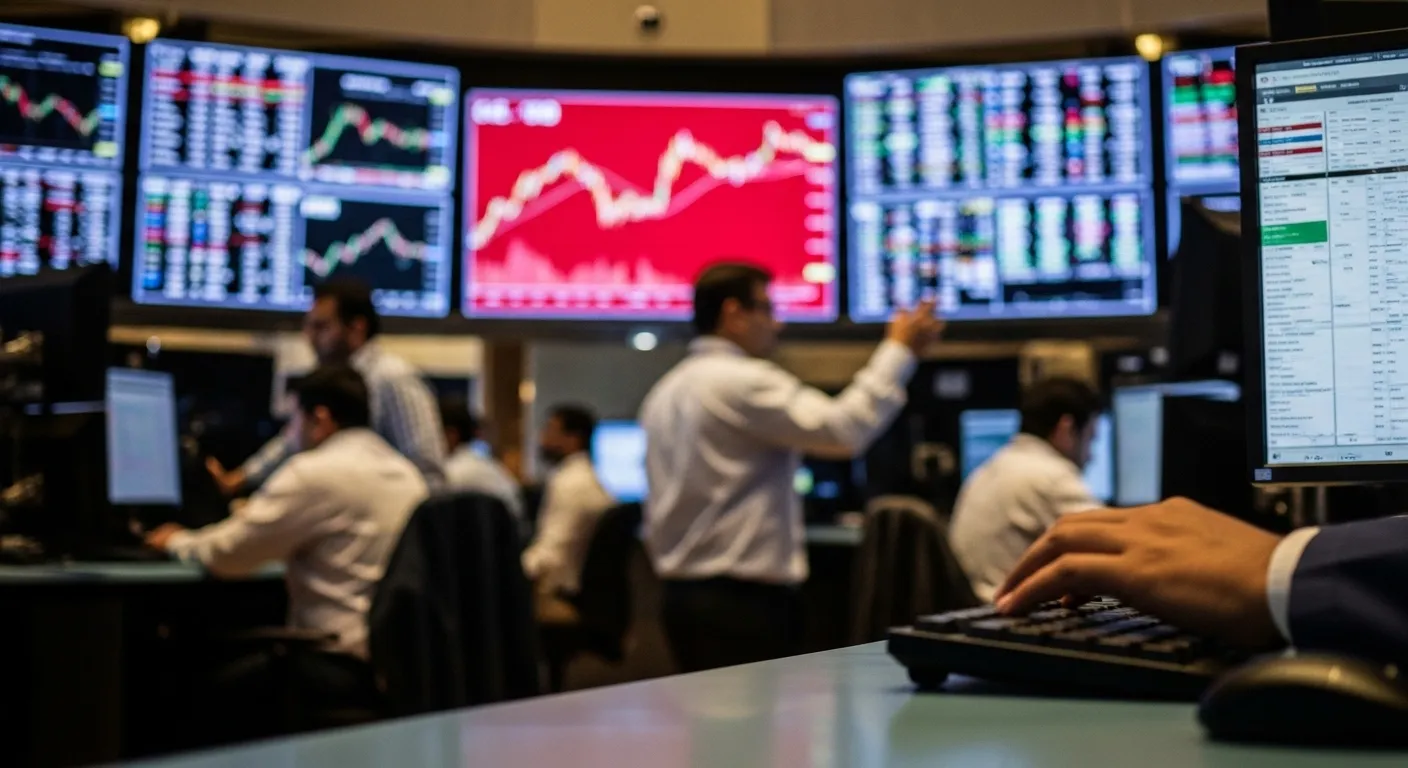 The Sensex doesn’t move randomly. Big daily swings are usually the result of global cues, institutional money flows, economic policy decisions, and market psychology acting together. What often looks like sudden panic is actually a chain reaction that starts somewhere else in the world or within India’s policy and earnings landscape. Below is a simple, easy-to-follow breakdown of the main reasons behind sharp Sensex movements.
Global markets set the overnight mood: Falls in US or Asian markets due to inflation, rate fears, or weak data often cause gap-down openings in India the next morning.
FIIs drive short-term market direction: Foreign Institutional Investors move massive capital. When global sentiment turns risk-off, their selling overwhelms domestic buying and drags indices down.
US Federal Reserve policy influences Indian flows: Higher US interest rates make America more attractive, pulling money out of India, weakening the rupee, and pressuring Indian stocks.
Crude oil price spikes hurt India quickly: Since India imports most of its oil, rising crude increases inflation and costs, impacting profits across autos, airlines, and manufacturing.
Geopolitical tensions trigger panic selling: Wars, trade disputes, or global political shocks push investors toward gold and bonds, causing sudden sell-offs in Indian equities.
Asian and European markets act as early signals: If Japan, Hong Kong, or European indices fall sharply, Indian markets usually follow the global trend rather than stay isolated.
Domestic policies and Budget announcements move markets: Tax changes, regulations, or pro-growth reforms announced by the government can cause instant rallies or sell-offs.
Quarterly earnings from large companies matter most: Earnings misses or weak guidance from heavyweights like IT or banking stocks can move the entire index sharply.
RBI interest rate decisions affect borrowing and growth: Rate hikes slow loans and spending, while dovish RBI signals often trigger relief rallies.
FII vs DII buying decides market stability: When domestic institutions absorb FII selling, markets stay calm. When both sell together, crashes happen.
Rupee movement creates sector-level swings: A weak rupee hurts importers but helps exporters, causing IT and banks to move in opposite directions.
Market sentiment and fear amplify moves: High India VIX levels signal panic. Fear-driven selling often pushes markets further than fundamentals justify.
Algorithmic trading accelerates price swings: Automated trades trigger mass buying or selling when key levels break, turning small moves into big point swings.
Derivative expiry days increase volatility: Weekly and monthly F&O expiries force position closures, leading to sharp and unpredictable index movements.
Retail investor herd behavior adds fuel: Panic selling by retail traders during declines worsens intraday volatility and deepens falls.
Breaking news and social media cause knee-jerk reactions: Viral headlines or tweets trigger instant trades, often before facts are fully understood.
How to Effectively Invest During Volatility
 Now that we understand the triggers, the real question is: how should you react? Learning how to invest during volatility is what separates seasoned wealth builders from temporary speculators. Instead of viewing a 500-point drop as a loss, successful investors view it as a discount on high-quality companies.
The key to surviving and thriving in a volatile market is to have a system that removes emotion from the equation.
When you invest during volatility, you are essentially betting on the long-term growth of the Indian economy while ignoring the short-term noise. If the fundamentals of a company haven't changed, a dip in its stock price due to a global event is often a strategic buying opportunity.
A. Utilizing Systematic Investment Plans (SIPs)
SIPs are the ultimate weapon for retail investors. By investing a fixed amount every month, you automatically buy more units when the market is down and fewer units when the market is high.
This "rupee cost averaging" ensures that you don't have to time the market. When the Nifty drops 400 points, your SIP simply gets you more for your money.
B. Maintaining a Diversified Asset Allocation
A well-diversified portfolio is your best defense. If you only hold small-cap stocks, a volatile day will hit you much harder.
By spreading your investments across Large-cap, Mid-cap, Gold, and Debt instruments, you ensure that even if the Sensex falls, your entire net worth doesn't take the same hit. Different asset classes react differently to the same news.
C. Focusing on Quality and Strong Fundamentals
During a market crash, "junk" stocks fall the hardest and rarely recover. However, "blue-chip" companies with strong balance sheets and consistent earnings usually bounce back quickly.
When looking to invest during volatility, focus on companies that have survived previous cycles. These are the businesses that have the cash reserves to weather economic storms.
D. Keeping "Dry Powder" for Market Dips
Professional investors always keep a portion of their portfolio in cash or liquid funds. This is known as "dry powder."
When the Sensex drops 1,000 points due to a temporary global scare, having cash on hand allows you to buy great stocks at attractive valuations. Without this liquidity, you are forced to just watch from the sidelines.
Conclusion: Navigating the Daily Swings
Seeing the Sensex and Nifty move hundreds of points daily can be intimidating, but it is a sign of a liquid and efficient market. These movements represent the constant recalibration of value based on new realities.
For a long-term investor, these daily fluctuations are often just "noise," but for the economy, they are vital signals of health and sentiment. Understanding the various Sensex volatility reasons helps you realize that the market is not breaking; it is simply processing information.
The ability to stay calm and invest during volatility is a superpower in the world of finance. Whether it is a shift in the US Federal Reserve's tone or a blockbuster earnings report from a local giant, every point moved tells a story of the global financial landscape.
In the world of investing, knowledge is the only hedge against volatility.
If you are looking to make sense of these complex market movements and want data-driven insights to guide your financial journey, discvr.ai provides the tools to filter the noise. We help you stay ahead of the curve by connecting global events to their real impact on your portfolio. Designed to turn market chaos into clarity, our platform empowers informed decision-making, while solutions like Loan Against Mutual Funds add flexibility by allowing access to liquidity without forcing long-term exits, even during volatile swings.